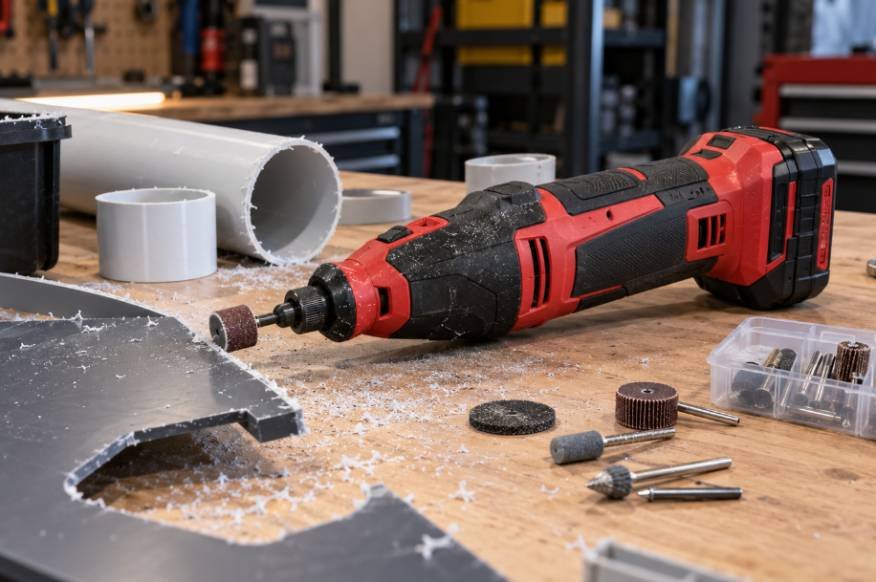
Plastic can go from a clean edge to a melted mess in seconds when a rotary tool runs too fast or the wrong bit stays in one spot too long. That is what makes choosing the best cordless rotary tool kit for plastic trimming and carving different from shopping for a general-purpose rotary tool.
For this kind of work, I pay close attention to low-speed control, usable torque, grip comfort, and cutter design. A tool may look powerful on paper, but if it bogs down at lower RPM or generates too much friction, it can make detailed plastic work harder instead of easier. Whether I am cleaning PLA supports, shaping ABS, trimming PVC, refining acrylic, or carving small model parts, I want a setup that cuts cleanly without overheating the material.
What Features Matter Most in a Cordless Rotary Tool for Plastic?
The first specification I check is minimum RPM. A tool capable of operating smoothly around 5,000 to 10,000 RPM gives me much more control when working with heat-sensitive materials.
A high maximum RPM can still be useful, but I would avoid a single-speed rotary tool that starts around 15,000 RPM or higher if plastic is the main material.
Torque also matters. Reducing RPM prevents excessive heat, but the motor still needs enough strength to keep the cutter moving through the material. Brushless motors can offer better efficiency and durability, while models with capable electronic control can maintain more consistent performance as resistance increases.
That combination is especially valuable when trimming thicker ABS, PVC, or automotive plastic.
For electronics projects that require testing circuits while working with fabricated enclosures or custom prototypes, an adjustable benchtop DC power supply for an electronics lab can provide controlled voltage and current for powering and testing electronic components.
Which Cordless Rotary Tool Is Best for Most Plastic Projects?
Dremel 8240: Best All-Around Choice
For an American homeowner or serious DIYer who wants one tool for plastic plus general workshop use, I like the balance offered by the Dremel 8240.
It uses a 12V battery and provides variable speeds from 5,000 to 35,000 RPM. Dremel also lists compatibility with its rotary accessories and attachments, giving users plenty of choices for cutting, sanding, carving, and finishing.
The 5,000 RPM starting point is particularly useful because I can begin gently on PLA, PETG, ABS, or acrylic and increase speed only when necessary.
The 12V platform also makes more sense than a tiny pen-style tool when I need to remove substantial material.
Which Rotary Tool Is Better for Fine Plastic Carving?
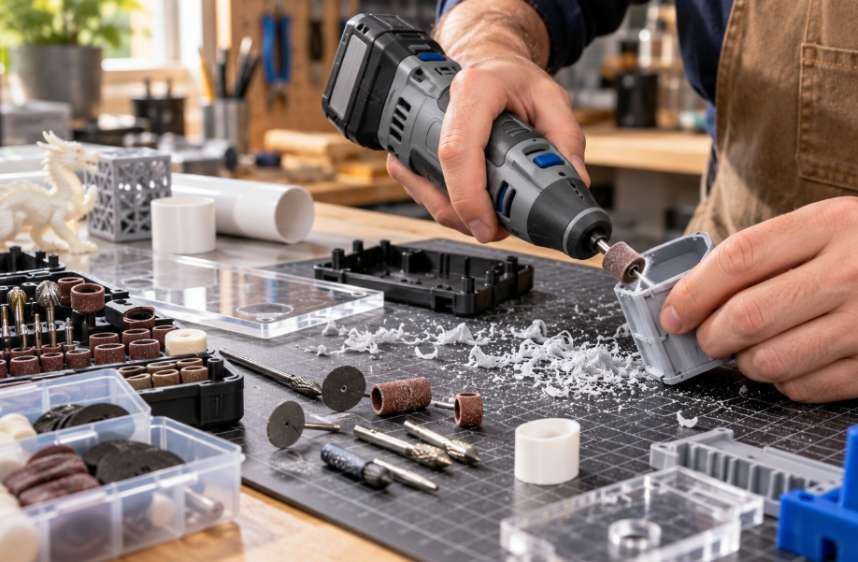
Dremel 8150: Better for Precision and Control
Detailed work changes my priorities. When I am cleaning support marks from a 3D print or carving a small model part, I would rather have a compact tool that is easy to guide.
The Dremel 8150 uses an 8V battery, a brushless motor, a soft grip, and variable speeds between 5,000 and 30,000 RPM. It also includes an adjustable LED work light.
That combination suits engraving, small carvings, seam cleanup, and precision sanding.
I generally favor a 4V-to-8V pen-style or compact rotary tool for miniature work because lower weight reduces hand fatigue and helps me control the cutter around tiny details.
Which Rotary Tool Is Better for Thick ABS and PVC?
Milwaukee M12 Brushless Rotary Tool: Best Heavy-Duty Option
For thicker plastic, I want more structural power.
Milwaukee’s M12 Brushless Rotary Tool operates from 5,000 to 27,500 RPM across 12 speed settings. Milwaukee states that its brushless motor and REDLINK electronics provide improved performance under load. The tool weighs about 0.8 pounds without sacrificing the benefits of the M12 battery platform.
This makes it particularly appealing for someone who already owns Milwaukee M12 batteries.
For trimming thick ABS sheets, modifying automotive plastics, or working on PVC, I would generally choose a capable 12V tool over a miniature craft model.
What RPM Should I Use When Cutting Plastic?
I usually start around 5,000 RPM and adjust from there.
There is no universal setting because acrylic, styrene, ABS, PLA, PETG, and PVC behave differently.
When working on electronics projects that involve plastic enclosures and circuit boards, a USB logic analyzer for debugging hardware signals can help you inspect digital signal timing and troubleshoot communication issues in embedded systems.
Bit diameter, cutting depth, pressure, and material thickness also affect heat buildup.
If the edge begins looking glossy, smeared, or stringy instead of producing clean chips, I treat that as a sign to reduce friction.
I also avoid pressing harder when a tool struggles. Excess pressure generates additional heat. Several lighter passes generally produce a cleaner result than one aggressive cut.
Which Rotary Tool Bits Cut Plastic Without Melting It?
The cutter geometry can matter as much as motor power.
For actual carving and material removal, I prefer sharp cutters that slice plastic rather than simply rubbing against it.
Are HSS Fluted Cutters Good for Plastic?
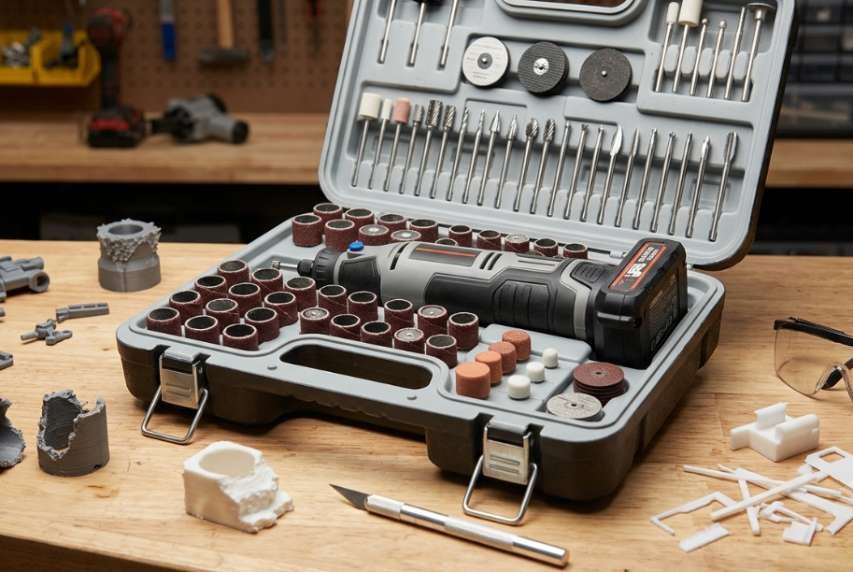
High-speed steel fluted cutters can work very well for plastic because their sharp flutes physically shave material away. Instead of relying purely on abrasion, they can create small chips or curls.
I find them useful for enlarging openings, shaping edges, carving recesses, and cleaning irregular areas.
Are Carbide Burrs Good for Plastic Carving?
Tungsten carbide burrs are useful when I need more aggressive material removal. Coarser tooth patterns can provide space for plastic chips to escape instead of packing tightly around the cutter.
I still use light pressure and short passes because even an efficient cutter can generate heat when held against one area for too long.
Should You Use Diamond Bits on Plastic?
Diamond-grit bits would not be my first choice for routine plastic carving.
They work through abrasion and are better known for materials such as glass, stone, and ceramics. On thermoplastics, abrasive grinding can generate substantial friction and may cause softened material to load the surface of the bit.
For plastic, I generally prefer a sharp fluted cutter, carbide cutter, suitable cut-off wheel, or sanding accessory chosen for the specific finishing stage.
How Do You Trim Plastic Without Melting the Edge?
My method is simple: low speed, light pressure, constant movement.
I secure the workpiece so it cannot vibrate, start at a conservative RPM, and allow the cutter to do the work. I avoid dwelling in one location and make several shallow passes on thicker material.
When plastic trimming involves electronics enclosures or circuit board repairs, choosing the right heat-control equipment is equally important; see this hot air rework station comparison for surface-mount components to understand how airflow control and thermal recovery affect precision electronics work.
When sanding PLA or PETG prints, I periodically stop and check the surface temperature. For precision edges, I often leave a tiny amount of excess material and complete the final finish with fine sanding.
This approach gives me much better control than trying to produce the finished edge in one pass.
Pen-Style vs. 12V Rotary Tool: Which Should You Buy?
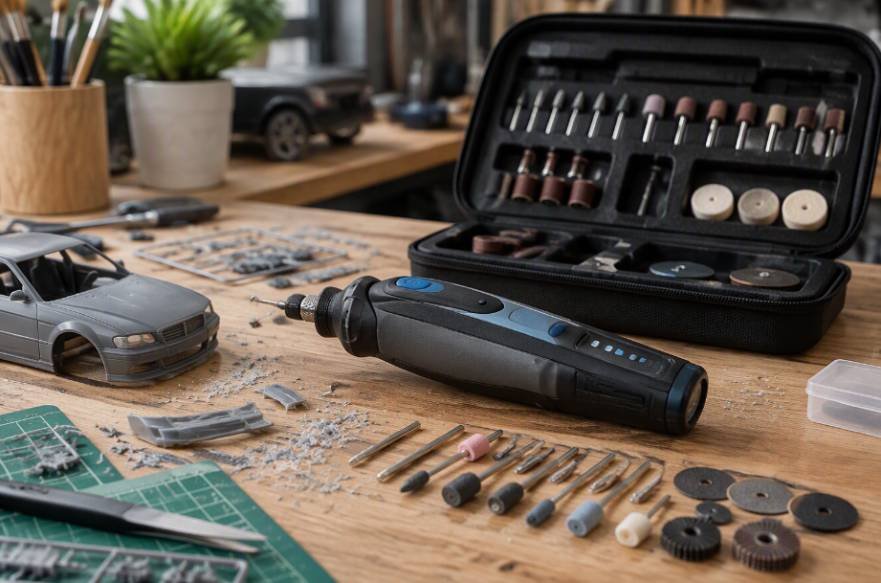
I would base the decision on the material rather than automatically buying the most powerful model.
A lightweight 4V-to-8V pen-style tool makes sense for scale models, miniatures, resin parts, light PLA cleanup, engraving, and intricate carving.
A 12V heavy-duty rotary tool makes more sense for thick ABS, PVC, plastic panels, automotive components, and jobs where the cutter encounters greater resistance.
The ideal tool is the one that maintains useful cutting performance at the speed your plastic requires.
Frequently Asked Questions
1. What is the best cordless rotary tool kit for plastic trimming and carving for beginners?
For beginners, I would prioritize a variable-speed model that starts around 5,000 RPM and accepts widely available cutting, carving, and sanding accessories. A manageable grip and predictable speed control matter more than extremely high maximum RPM.
2. Can a cordless rotary tool cut ABS plastic?
Yes. ABS can be trimmed and carved with a rotary tool. Start at a lower speed, apply light pressure, and make repeated passes to control heat.
3. Can I use a rotary tool to clean PLA and PETG 3D prints?
Yes. Rotary tools work well for removing support marks, enlarging holes, correcting fit, and smoothing rough areas. PLA and PETG can soften from friction, so use conservative RPM and brief contact.
4. Do I need a brushless rotary tool for plastic?
No. A brushed tool can work well. However, brushless motors often provide good efficiency and durability, while effective electronic speed control can help a tool maintain consistent performance under changing loads.
5. Is more RPM better when cutting plastic?
Not necessarily. Excessive speed can increase friction and heat. For plastic, controllability and efficient cutting often matter more than achieving the tool’s maximum RPM.
My Final Verdict
For general US DIY use, I would choose the Dremel 8240 because its broad 5,000-to-35,000 RPM range and established accessory system cover both precision work and heavier projects.
For fine carving and 3D-print cleanup, the smaller Dremel 8150 is attractive. For demanding material removal or users already invested in Milwaukee batteries, the M12 Brushless Rotary Tool offers a compelling alternative.
The best cordless rotary tool kit for plastic trimming and carving ultimately needs more than maximum power. I look for controllable low RPM (Revolutions Per Minute), enough torque under load, manageable weight, and cutting accessories that remove chips efficiently instead of generating unnecessary friction.