The biggest problem with smart lighting usually is not Wi-Fi, apps, or voice assistants. It is the ordinary wall switch that someone flips off without thinking. That single action explains much of the debate around smart switch vs smart bulb for home automation. Smart bulbs offer remarkable control over color and individual lights, but they need continuous power. Smart switches behave more like conventional lighting controls and can manage several ordinary bulbs at once.
Neither technology is universally better. The right choice depends on the fixture, household behavior, wiring, desired lighting effects, and whether you own or rent the home.
The Fundamental Difference Is Where the Intelligence Lives
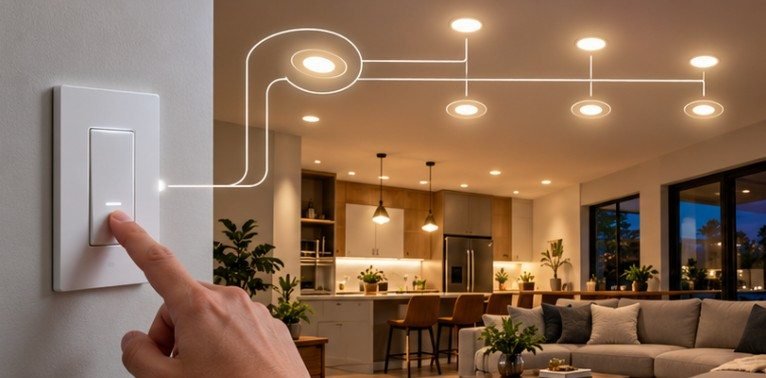
A smart switch places the connected electronics in the wall. It replaces a conventional light switch and controls electricity flowing to the fixture.
That means the bulbs themselves can remain relatively ordinary LEDs. A single smart dimmer might operate four recessed lights, a dining-room chandelier, or several ceiling fixtures connected to the same circuit.
A smart bulb moves the intelligence into the lamp itself. The bulb contains its LED components plus communication electronics for technologies such as Wi-Fi, Bluetooth, Zigbee, Thread, or another smart-home protocol.
Because the bulb itself is smart, it can offer capabilities that a typical wall switch cannot.
You might independently dim it, change its color temperature, produce saturated colors, create scenes, or control one bulb while neighboring bulbs remain unchanged.
The U.S. Department of Energy notes that LEDs are inherently controllable and can work with dimming, sensors, and other lighting-control technologies.
Why Smart Switches Often Win for Everyday Ceiling Lights
Imagine a kitchen with eight recessed LED lights. Replacing all eight with premium connected bulbs creates eight smart devices that must stay powered and connected. Installing one compatible smart wall switch can instead automate the entire lighting circuit.
That makes switches particularly attractive for kitchens, hallways, bathrooms, living rooms, garages, and other locations where several lights are normally operated together.
Physical controls remain intuitive
One underrated advantage is that visitors do not need instructions. Someone can walk into the room, press the switch, and get light. Your app, automation routines, schedules, and voice controls remain available without forcing everyone to learn a new way of using the house.
With conventional smart bulbs, turning their standard wall switch off cuts their electricity. The bulb disappears from the smart-home network until someone restores power.
One device can control several bulbs
Economics also change as the fixture gets larger. A four-bulb ceiling fixture does not necessarily require four connected products if all four bulbs always operate together. A single smart switch can control the circuit while allowing inexpensive compatible LED lamps to handle the illumination.
DOE research on lighting controls emphasizes that the effectiveness of connected lighting depends not simply on adding technology but on selecting controls suited to the intended use.
You can replace bulbs independently
Another advantage appears years later. If an ordinary LED fails, you replace the bulb instead of replacing both a light source and its networking electronics. Your automation system remains installed in the wall.
Where Smart Switches Become Complicated
The main disadvantage is installation. Replacing a bulb takes seconds. Replacing a wall switch means interacting with household electrical wiring. Some smart switches require a neutral conductor, while product requirements vary by model. Older homes may have switch boxes that were never wired with modern smart controls in mind.
Electrical compatibility deserves careful attention as well. LEDs used with smart dimmers should be rated for dimming and compatible with the control.
The Electrical Safety Foundation International advises homeowners to have lighting-control installations checked or performed by a qualified electrician and notes that LED lamps must be compatible with dimmers. For renters, permanently replacing electrical controls can also be impractical or prohibited by the lease.
Smart Bulbs Offer Something Switches Cannot: Control of the Light Itself
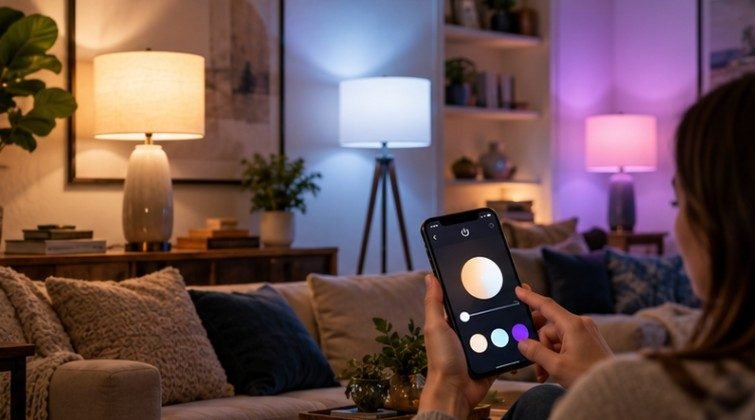
A switch controls electricity. A smart bulb can control the characteristics of the illumination. That distinction matters. A tunable-white bulb might produce cooler light while you work and warmer light during the evening. RGB models can create colored accent lighting for entertainment, holidays, gaming rooms, or architectural features.
Smart bulbs are therefore particularly useful in table lamps, bedside lamps, floor lamps, decorative fixtures, and spaces where lighting atmosphere matters as much as basic on-off control.
Each bulb can behave differently
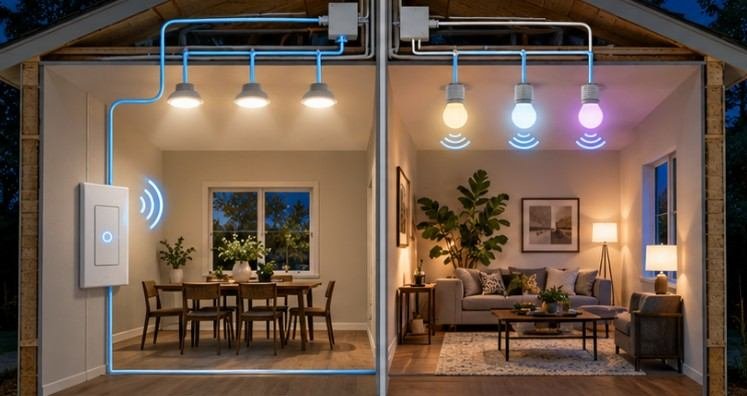
Consider a fixture containing three bulbs. With a typical smart switch, they brighten, dim, and shut down together.
With three smart bulbs, one could provide warm white light, another could dim to 20%, and a third could turn off completely. That level of individual control is impossible with an ordinary circuit-level smart switch.
Installation is almost effortless
Smart bulbs also make home automation accessible to renters. Screw in the bulb, connect it through the manufacturer’s app or hub, and configure the automation. When you move, unscrew it and take it with you. There is no rewiring and normally no landlord involvement.
The Problem Every Smart-Bulb Household Eventually Discovers
Smart bulbs need power even when they appear to be off. Their electronics must remain energized so they can receive the command telling them to turn back on. If someone switches off the wall circuit, the bulb stops communicating. A 7 a.m. automation cannot illuminate a bulb that has no electricity.
That creates an awkward contradiction: a smart bulb works best when people stop treating its traditional light switch like a light switch. You can reduce the problem with switch guards, wireless remotes, smart-button controllers, or smart switches designed to maintain power while sending digital commands to compatible bulbs. But the added hardware can erase some of the simplicity that made smart bulbs attractive initially.
Do Smart Lights Actually Save Electricity?
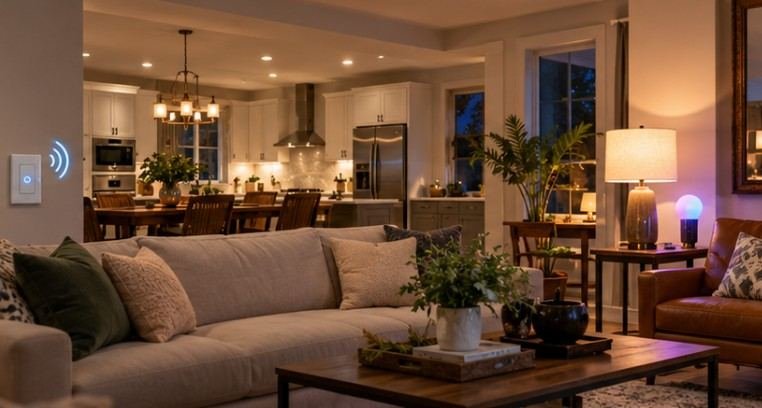
The word “smart” does not automatically mean efficient. The biggest efficiency gain normally comes from using LED lighting rather than older incandescent technologies. Smart features can provide additional savings by preventing unnecessary operation through schedules, occupancy sensing, dimming, and remote shutoff.
ENERGY STAR recommends features such as occupancy-based controls, geofencing, and remote operation as ways smart lighting can prevent lights from remaining on unnecessarily.
In other words, the automation must change behavior. A connected bulb that remains illuminated all evening will not magically use less electricity simply because an app controls it.
Why a Hybrid Lighting System Is Often Better
The strongest answer is frequently not one technology or the other. Use smart switches where people expect conventional lighting behavior: kitchens, entryways, hallways, bathrooms, dining rooms, and groups of recessed ceiling lights.
Reserve smart bulbs for bedside lamps, accent fixtures, entertainment rooms, reading lamps, or locations where color and individualized control genuinely add value. This approach keeps routine lighting predictable while preserving the most interesting capabilities of connected bulbs.
It also limits the number of individually connected devices you need to configure, update, troubleshoot, and eventually replace.
Frequently Asked Questions
1. Can I use smart bulbs with a smart switch?
Sometimes, but compatibility matters. Cutting electricity to a smart bulb disables its connected features. Specialized smart switches or controllers that keep the bulb powered while sending commands are better choices.
2. Do smart switches work without Wi-Fi?
Many retain basic manual switching during an internet outage, while advanced automation varies by product, hub, and protocol. Check local-control capabilities before buying.
3. Are smart bulbs better for renters?
Usually yes. They require no permanent wiring changes and can be removed easily when moving.
4. Which costs less for a room with many lights?
A smart switch is often more economical when several bulbs operate together because one control can automate the entire circuit instead of requiring a connected bulb in every socket.
The Better Choice Is the One Nobody Has to Think About
The best smart home technology becomes almost invisible. For everyday ceiling lighting, smart switches usually achieve that goal better because the wall control continues working naturally while automation runs behind the scenes. Smart bulbs earn their place where color, tunable white light, portability, or individual fixture control provides genuine value.
Rather than turning every light into the same type of connected device, map your home room by room. Put intelligence at the switch when you need dependable group control and inside the bulb when you need control over the light itself. That simple distinction prevents most smart-lighting frustrations before they begin.