A smart thermostat can cost well over $100, yet the federal government’s estimate of its average annual savings is only about $50. That sounds less impressive than many advertisements suggest, but it does not tell the whole story.
So, do smart thermostats actually save money? For many households, yes—but the size of the payoff depends heavily on how you currently control your heating and air conditioning. A house that sits empty eight hours a day has far more room to save than one where someone already adjusts the thermostat carefully.
The real value is not Wi-Fi. It is preventing your HVAC system from heating or cooling an empty house unnecessarily.
How Much Can a Smart Thermostat Really Save?
The strongest independent benchmark comes from the U.S. Environmental Protection Agency’s ENERGY STAR program. Certified smart thermostats must demonstrate savings using aggregated data from real homes rather than simply relying on laboratory projections.
ENERGY STAR estimates that a certified model saves the average household about 8% on heating and cooling bills, or roughly $50 annually. Homes with relatively high HVAC expenses or homes that are unoccupied for much of the day may save around $100 per year.
Research from the nonprofit American Council for an Energy-Efficient Economy has also found meaningful savings. Its review of multiple smart-thermostat studies reported heating and cooling energy reductions in roughly the 8% to 15% range, although actual performance varied among households.
That variation matters. A thermostat cannot eliminate energy use your household was not wasting in the first place.
Where the Savings Actually Come From
Smart thermostats do not make furnaces, heat pumps or air conditioners inherently more efficient. Instead, they change how long those systems run and when they run.
Automatic Setbacks Do Most of the Work
Imagine leaving your home at 8 a.m. and returning at 6 p.m. A conventional thermostat left at 72°F may try to maintain that temperature for ten hours even though nobody is home.
A smart thermostat can automatically allow the indoor temperature to drift during that period, then begin restoring your preferred temperature before you arrive.
The U.S. Department of Energy says households can save as much as 10% annually on heating and cooling by turning the thermostat back 7°F to 10°F for eight hours per day, although results vary by climate and HVAC system. Smart models simply make these setbacks easier to maintain consistently.
Occupancy Detection Fixes Forgotten Adjustments
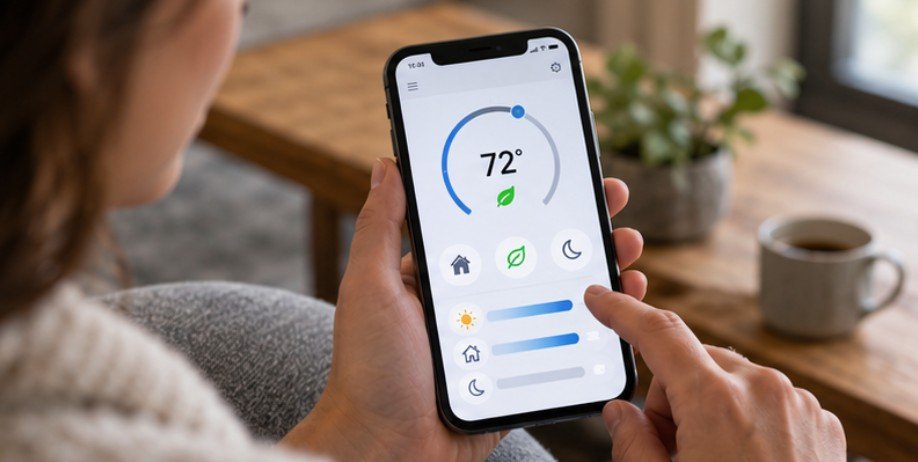
Schedules work well when life follows a schedule. Real households often do not. Some smart thermostats use occupancy sensors, while others support geofencing through household members’ phones. If everyone leaves unexpectedly, the thermostat can enter an energy-saving mode without somebody remembering to touch the controls.
ENERGY STAR-certified models may also learn temperature preferences, provide HVAC runtime information and automatically apply energy-saving settings while occupants are asleep or away.
Energy Reports Expose Expensive Habits
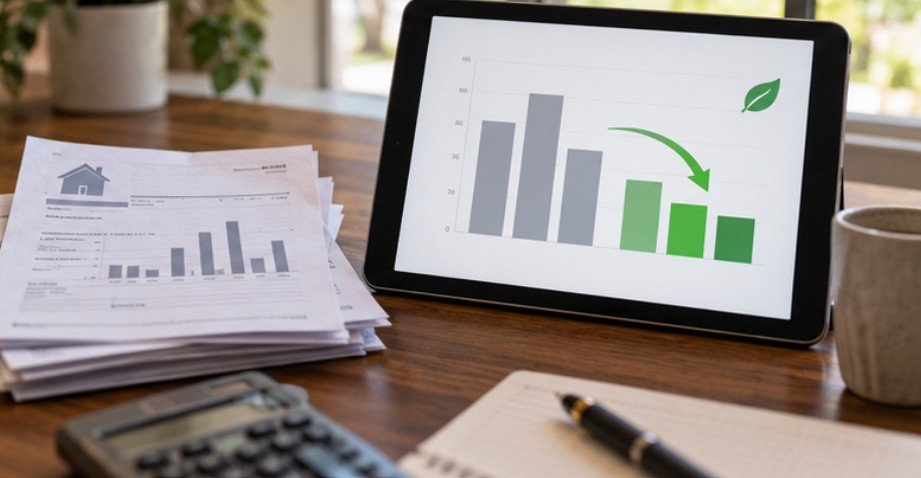
One underrated feature is information. Traditional thermostats tell you the temperature. Smart thermostats can show how long the HVAC system operated and how changes in weather or thermostat settings affected runtime.
That feedback can reveal surprisingly expensive patterns, such as aggressive cooling during empty afternoons or unusually long equipment operation that may justify checking filters or HVAC maintenance.
Because smart thermostats rely on a stable network for remote access, app-based controls, and connected features, weak Wi-Fi coverage can interfere with their day-to-day convenience.
Homeowners experiencing intermittent disconnections or delayed responses can explore these practical tips on how to improve Wi-Fi coverage for smart home devices to strengthen connectivity and maintain more reliable control over their home environment.
A Simple Test to Estimate Your Savings
Before buying anything, look at your utility bills and estimate your annual heating and cooling spending.
Suppose your household spends approximately $1,200 per year operating its furnace and central air conditioner.
Using ENERGY STAR’s average 8% savings figure:
$1,200 × 0.08 = $96 per year
If the thermostat costs $180 after installation, your simple payback period would be:
$180 ÷ $96 = 1.9 years
Now consider a household spending only $500 annually on heating and cooling.
$500 × 0.08 = $40 per year
The same $180 thermostat could take approximately 4.5 years to recover its cost.
This is why blanket claims that every smart thermostat “pays for itself in a year” should be treated cautiously.
The Northeast Energy Efficiency Partnerships organization similarly recommends using measured thermostat data when evaluating savings because results can differ considerably among homes, climates and programs.
Who Has the Best Chance of Saving Money?

The strongest candidates are households that currently leave one temperature setting in place all day, regularly forget to change the thermostat before leaving, have predictable periods when nobody is home, or spend heavily on heating and cooling.
Climate matters too. A household running air conditioning for much of a Phoenix summer has more HVAC spending available to reduce than a household living in a mild coastal climate.
Researchers at the U.S. Department of Energy are continuing to study thermostat algorithms built around occupancy sensing, nighttime setbacks, weather forecasts and building thermal behavior, highlighting how control strategy—not simply internet connectivity—determines energy savings.
When a Smart Thermostat May Save Very Little
A disciplined homeowner with a well-programmed thermostat may already be capturing much of the available benefit.
If you already lower or raise temperatures whenever you leave, use sensible overnight settings and regularly adjust for seasonal changes, replacing your thermostat may deliver more convenience than additional savings.
Someone also has to use the smart features. Installing an expensive thermostat and permanently setting it to 72°F will not magically cut the utility bill.
Equipment compatibility can also complicate the calculation. Many smart thermostats require reliable low-voltage power, often through a C-wire. Certain high-efficiency, communicating or multi-stage HVAC systems may work best with controls designed specifically for that equipment. ENERGY STAR recommends confirming HVAC compatibility before purchasing.
Just as smart thermostats require compatible HVAC wiring and control systems, smart locks also need the right electrical setup to operate reliably.
If you are upgrading your home’s connected security, this guide on how to install a smart lock without a C-wire explains the wiring considerations involved and helps clarify why checking device compatibility before installation can prevent unnecessary complications.
Heat pumps deserve particular attention because poorly chosen setbacks can sometimes trigger expensive auxiliary resistance heat. The thermostat should support the system correctly rather than simply applying aggressive temperature changes.
Rebates Can Change the Math Quickly
Purchase price should not automatically be the price used in your payback calculation. Utilities across the United States frequently run efficiency programs that subsidize qualifying smart thermostats. ENERGY STAR maintains a rebate finder, and some utilities also operate voluntary demand-response programs.
When choosing a smart thermostat, it is also worth considering how the device communicates with other connected products in your home. Understanding smart home protocols, including Wi-Fi, Zigbee, Z-Wave, Thread, and Matter, can help you evaluate connectivity requirements, ecosystem compatibility, and integration options before investing in a new device.
During periods of unusually high electricity demand, participating thermostats may temporarily modify temperature settings. Customers typically retain the ability to override adjustments, while qualifying programs may offer bill credits or other incentives. ENERGY STAR-certified thermostats are required to support utility-program functionality while preserving consumer override capability.
A $180 thermostat that becomes a $60 upgrade after a utility rebate obviously reaches payback much faster.
Frequently Asked Questions
1. Do smart thermostats actually save money every year?
Usually, but savings vary. ENERGY STAR estimates certified thermostats save about 8% of heating and cooling costs on average. Homes with frequent unoccupied periods may save more.
2. How long does a smart thermostat take to pay for itself?
Divide the installed cost after rebates by your expected annual savings. Depending on HVAC spending, purchase price and household habits, payback may range from roughly one year to several years.
3. Are smart thermostats better than programmable thermostats?
They are easier to automate. Smart models can add occupancy sensing, geofencing, remote control, learning features and energy reports, reducing the need for homeowners to maintain schedules manually.
4. Will a smart thermostat reduce my electric bill immediately?
It can, but only if it changes HVAC behavior. Savings come primarily from reducing unnecessary heating or cooling while you are asleep or away.
The Bottom Line
A smart thermostat is best viewed as an automatic energy manager, not a device that magically makes an HVAC system more efficient. Its financial value comes from doing consistently what many people intend to do but forget: backing off heating or cooling when comfort is unnecessary.
For households with expensive HVAC bills, long periods away from home and inefficient thermostat habits, the numbers can be compelling. For someone already managing temperatures carefully, convenience may be the bigger reward.
Before buying, check last year’s energy bills, estimate your HVAC spending, calculate 8% of that amount and search for local rebates. That simple calculation will tell you more about your likely savings than almost any thermostat advertisement.