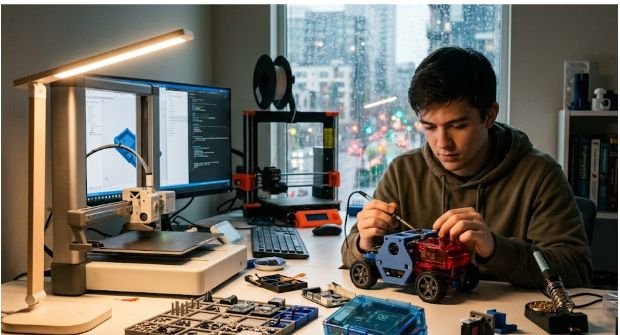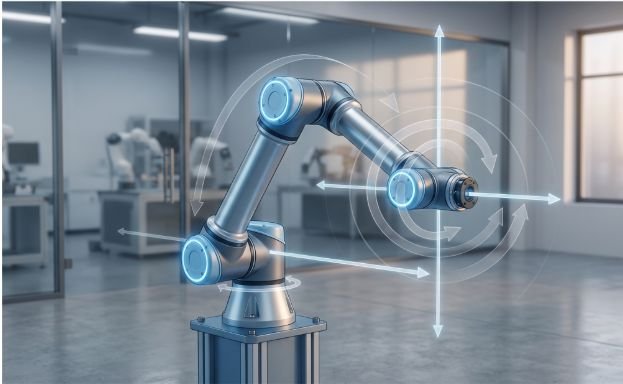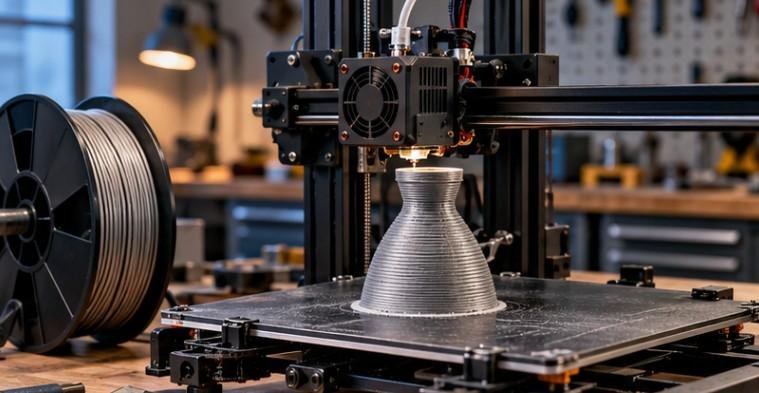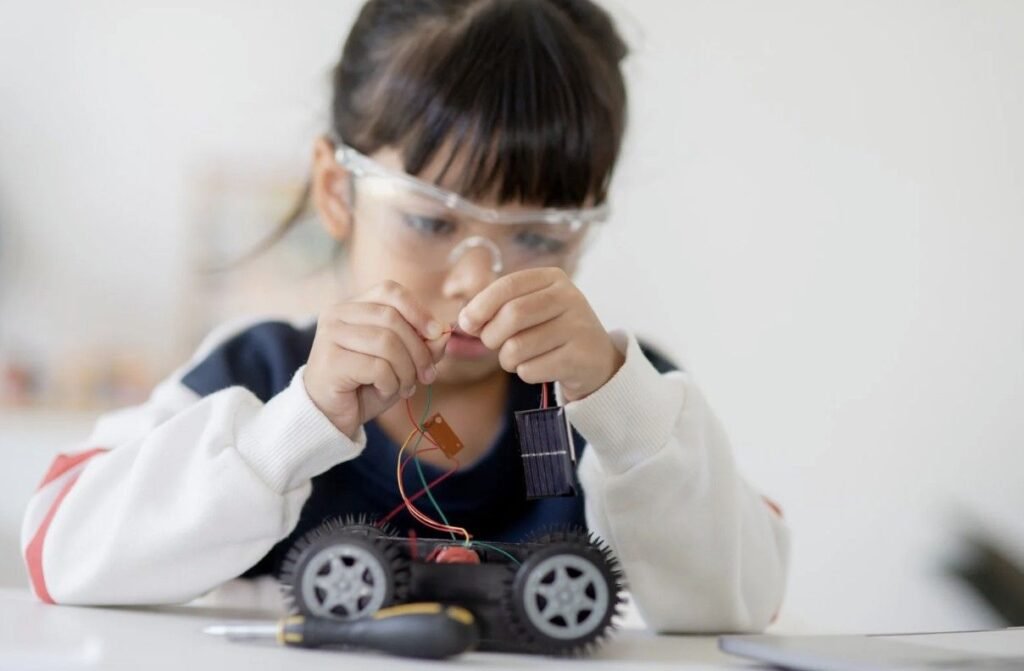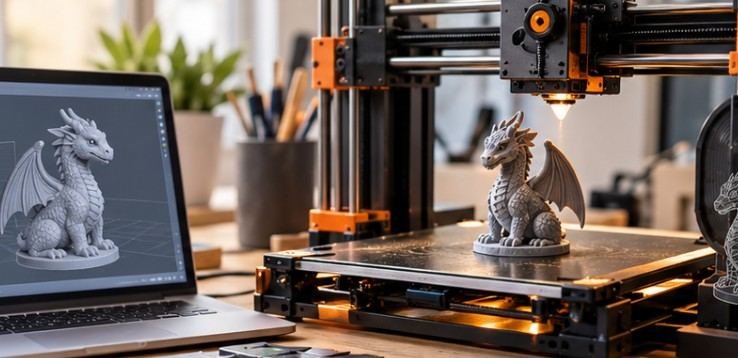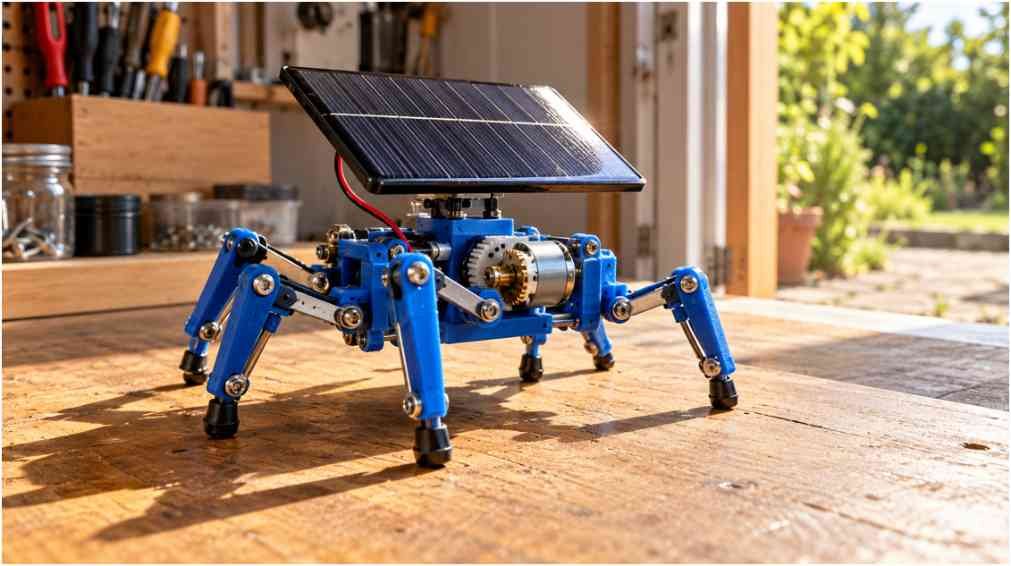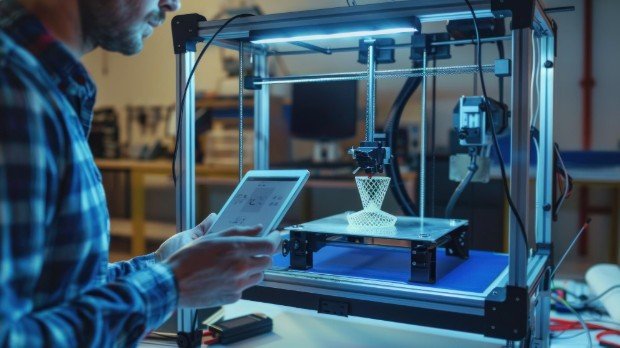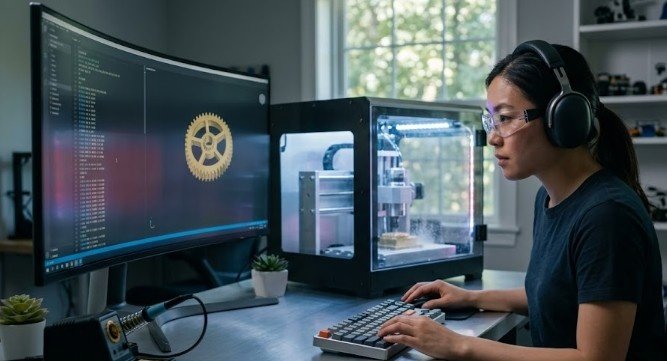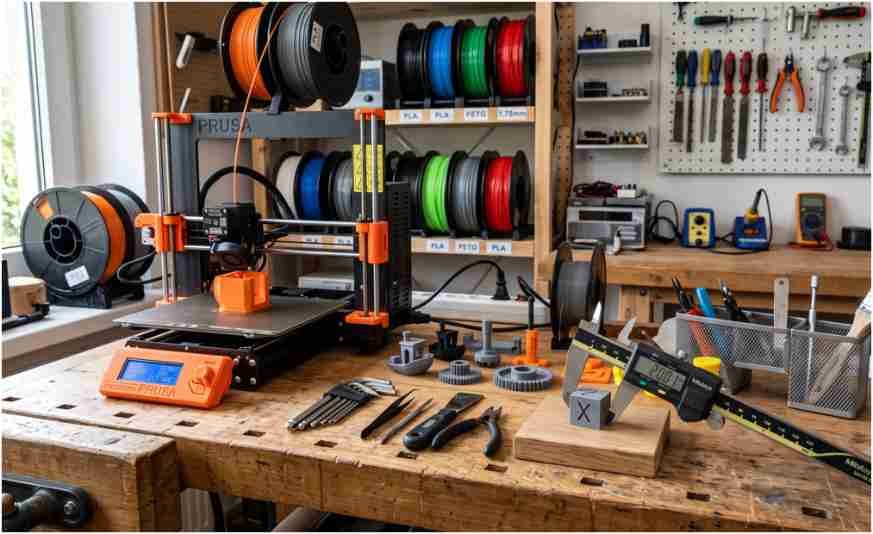
Sitting at a workbench cluttered with custom servo brackets and tangled jumper wires, you have likely watched a desktop machine lay down plastic filament and wondered how this wizardry came to be.
It is easy to take this seamless process for granted when bringing your mechanical creations to life, but the birth of this technology was fueled by absolute corporate desperation. Understanding the roots of this innovation reveals why 3d printing was invented and why it remains the ultimate secret weapon for creating your own custom robotic components today.
Key Takeaways
- Frustrated by multi-week wait times for simple industrial molds, Chuck Hull invented stereolithography in 1984 to slash prototyping down to mere hours.
- Traditional subtractive manufacturing required carving away heavy blocks of material, wasting precious resources and restricting intricate designs.
- Additive manufacturing builds objects layer by layer, matching the data inside 3D computer models perfectly.
- Expiration of foundational hardware patents in 2009 triggered a massive open-source boom, lowering equipment costs for everyday makers.
- Modern robotics projects depend on this rapid iteration technology to fabricate custom brackets, sensor mounts, and lightweight structural components.
Why 3D Printing Was Created?
During the early 1980s, an American engineer named Chuck Hull worked at a company that used ultraviolet light to cure thin coatings of plastic veneers onto furniture surfaces. He constantly faced a frustrating bottleneck because designing a small plastic prototype required sending blueprints to an external machine shop.
This breakthrough eventually made it possible to create many useful things to 3D print for daily life, from custom storage organizers and cable clips to kitchen accessories, phone stands, replacement parts, and other practical household items that save both time and money.
This traditional molding and tooling process took weeks or months just to yield a single test sample. If a single screw hole was misaligned by one millimeter, the entire grueling cycle had to start completely over from scratch.
Hull realized that if he could stack thousands of thin ultraviolet cured plastic layers on top of each other under computer control, he could form solid objects in minutes rather than weeks.
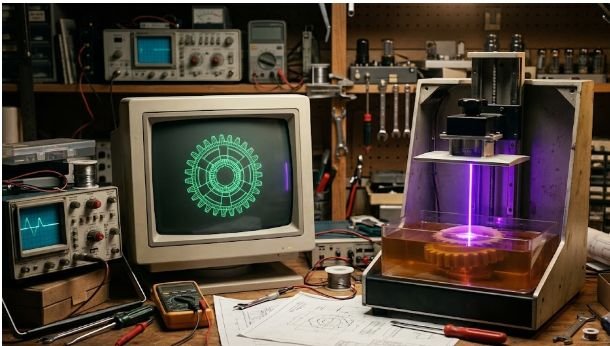
He officially coined the term stereolithography in his 1984 patent application, creating a machine that used a precise UV laser beam to trace shapes across a vat of liquid photopolymer resin. This breakthrough laid the foundation for the entire digital fabrication industry, forever changing how we transform ideas into physical realities.
Solving the Rapid Prototyping Nightmare
Engineers in the mid-1980s needed a faster way to verify their mechanical fits before committing to expensive production tooling. The invention of the stereolithography apparatus allowed design teams to test real physical iterations overnight, creating the foundational industry concept known as rapid prototyping.
The Birth of the STL File Format
To command his new machine, Hull co-created the STL file format to translate complex three-dimensional computer designs into flat slices the printer could read. This file type remains a standard across modern slicing software, acting as the vital translation bridge between digital robotics code and tangible physical hardware.
Early Innovations That Reshaped the Industry
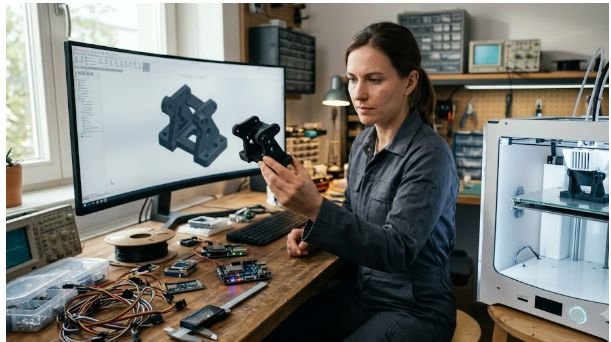
The technology remained locked away in high-end corporate labs for decades due to strict legal protections.
While Hull is largely credited with the first patent and the coining of stereolithography, the drive to create layer by layer manufacturing sparked several parallel innovations in the 1980s. A Japanese researcher named Hideo Kodama developed a similar layer by layer approach using photosensitive resins in 1981, which paved the way for the technology.
Later in 1988, Selective Laser Sintering was developed by Carl Deckard at the University of Texas, using lasers to fuse together powdered materials like plastic or metal.
The landscape shifted permanently in 1989 when Scott Crump invented Fused Deposition Modeling, a technique that melted polymer filaments and deposited them layer by layer. This specific development remains the basis for most of today’s desktop machines used by robotics hobbyists worldwide.
When these early patents expired, global open-source communities rapidly iterated on extruder designs, heated print beds, and control boards, paving the way for the reliable hardware we utilize today.
Breaking the Chains of Tooling Costs
Traditional injection molding requires cutting heavy steel molds that cost thousands of dollars before a single plastic part can even be produced. Additive fabrication removes these massive financial barriers completely, allowing low-volume production runs and custom iterations to become highly cost-effective for small engineering teams.
Material Efficiency in Structural Design
Because additive systems place material only where the computer model dictates, parts can be engineered with internal honeycomb infill patterns. This specific layout provides incredible structural rigidity while keeping the overall component lightweight, which is an ideal characteristic for building responsive robotic joints.
The Shift to Modern Manufacturing Methods
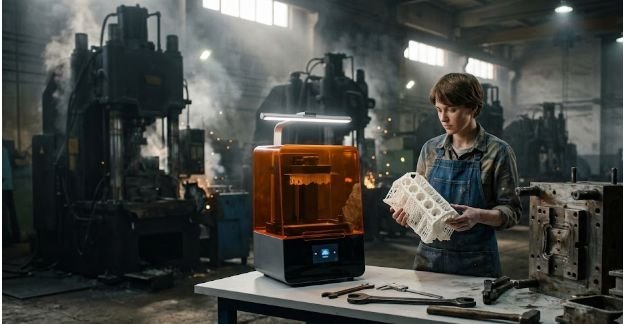
Integrating custom fabrication into your automation workflow requires a solid understanding of how digital models translate into structural mechanical elements.
[CAD Design] ➔ [Slicer Software (STL/3MF)] ➔ [G-Code Generation] ➔ [Layer-by-Layer Extrusion]
To maximize part strength when fabricating structural brackets, always pay close attention to the orientation of your model on the build plate.
Because parts are built layer by layer, they are naturally weaker along the horizontal print lines, meaning a vertical load can easily shear the layers apart if the forces pull against the grain. Orient your components so the functional mechanical stress runs parallel to the deposited strands of plastic filament, ensuring the continuous lines absorb the forces safely.
When selecting filaments for structural mechanical designs, look beyond standard PLA and explore functional materials like Polyethylene Terephthalate Glycol or carbon-fiber infused nylon. These advanced options offer superior impact resistance and structural flex, preventing your custom motor mounts from cracking under continuous high-torque operations.
Additionally, configuring your slicing software to use at least four outer wall perimeters will drastically increase your component’s thread strength when driving structural assembly screws directly into the plastic.
3D Printing Invented for Robotics Tasks
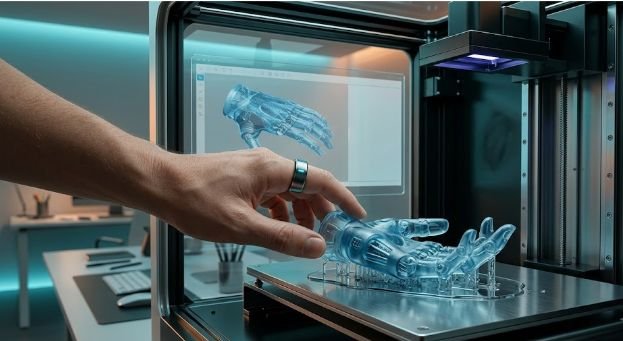
Applying this process to robotics means you can iterate your custom chassis designs within a single afternoon instead of waiting for external machine shops. By understanding how the technology layers material, you can build integrated wire channels directly into your robot limbs, saving space and protecting vital sensor cables.
Optimizing Machine Settings for Strength
Makers must fine-tune their extrusion temperatures and cooling fan speeds to ensure optimal adhesion between each deposited layer of plastic. High layer bonding strength is absolutely critical when your robot handles lifting tasks or experiences sudden vibrational shocks from high-rpm electric motors.
Frequently Asked Questions
1. What was the original purpose of 3D printing?
The original concept was created to provide rapid industrial prototyping solutions, allowing engineering teams to quickly test the physical fit of plastic parts without waiting weeks for traditional factory molding.
2. What is the main purpose of 3D printing?
The primary goal is to seamlessly translate digital three-dimensional designs into physical objects layer by layer, maximizing geometric design freedom while minimizing material waste during production.
3. How did 3D printing get started?
The process started in 1983 when inventor Chuck Hull used a targeted ultraviolet light beam to solidify thin layers of liquid photopolymer chemical resin inside a laboratory setup.
4. Who invented the 3D printer and why?
Chuck Hull invented stereolithography in 1984 because he was completely fed up with the incredibly slow, multi-week delays required to manufacture basic prototype testing molds.
Wrapping Up on The Tale of Additive Automation
Looking back at the historical timeline shows us that this technology was born out of a pure desire to escape slow industrial workflows. Now that you know why was 3d printing invented and how it sits right on your desktop, you possess the power to iterate, prototype, and build custom automated systems at a speed early engineers could only dream of.
Keep upgrading your slicing skills, keep tuning your hardware, and use this incredible layer by layer freedom to bring your wildest mechanical creations to life.