Stripping a sub-millimeter chassis screw on an articulated robotic arm or camera gimbal stops a repair in its tracks. I learned this lesson the hard way while rebuilding a miniature harmonic drive actuator: a cheap driver bit rounded off an M1.4 pan-head fastener, turning an ordinary twenty-minute teardown into a grueling four-hour micro-extraction operation.
Finding the best precision screwdriver set for small robotics repair is about more than accumulating dozens of tiny bits; it requires surgical engagement tolerances, unyielding tool steel, and silky-smooth handle rotational dynamics.
Micro-scale robotics repairs expose tools to unforgiving demands. Between high-density carbon-fiber frames, tapped Delrin mounts, and anodized aluminum enclosures, standard hardware store drivers fall flat. They introduce cam-out, warp under torque, and introduce static charges directly beside sensitive motor drivers. Below is my breakdown of driver metallurgy, micro-torque dynamics, and three field-tested driver kits that belong on an electronics workbench.
Anatomy of a High-Precision Robotics Driver
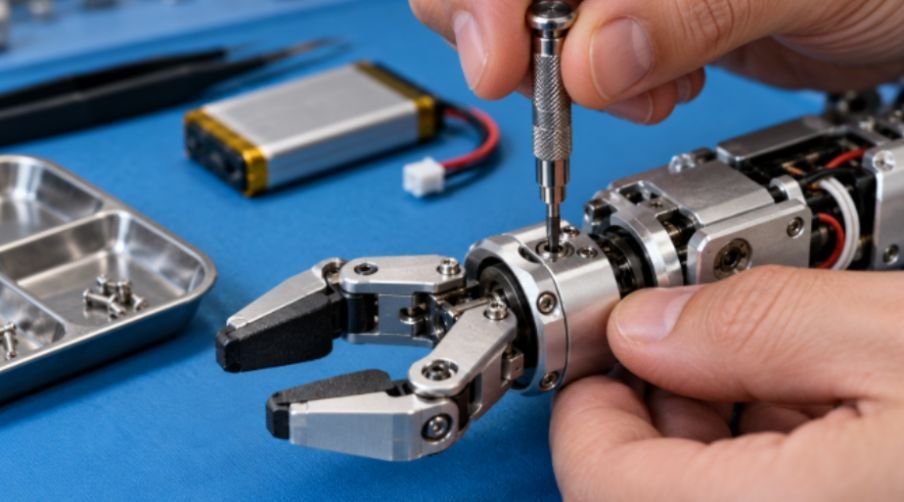
Precision screwdrivers look deceptively simple, yet small robotic assemblies demand precise engineering at every interface. When working on millimeter-scale components, microscopic manufacturing flaws translate directly into stripped fastener heads.
+————————————————————————-+
| ANATOMY OF A HIGH-PERFORMANCE MICRO-DRIVER |
| |
| [ Ultra-Smooth Swivel Cap ] —> Low-friction finger axial pressure |
| | |
| [ Knurled Aluminum Barrel ] —> Tactile micro-adjustment grip |
| | |
| [ Precision Collet / Chuck] —> Zero runout & wobble-free retention |
| | |
| [ CNC-Machined S2 Bit Tip ] —> 60 HRC hardness, tight fastener fit |
+————————————————————————-+
Metallurgy Matters: S2 Tool Steel vs. Chrome Vanadium
The steel composition of your driver bits dictates whether a tool lasts for years or rounds off within a week. The two primary bit steels found in precision kits are Chrome Vanadium (Cr-V) and S2 tool steel.
Chrome Vanadium, typically heat-treated to around 50–54 Rockwell Hardness C (HRC), works well on macro fasteners. However, on miniature Torx and micro-hex profiles, Cr-V tends to deform. Once the microscopic edges of a T3 or 0.9 mm hex bit glaze over, the bit will destroy every fastener it touches.
In contrast, shock-resisting silicon-molybdenum S2 steel—tempered according to ASTM A681 tool steel standards—achieves an optimal hardness of 58–62 HRC without becoming brittle. S2 bits maintain their crisp edges under rotational shear stresses. This structural stability prevents the dreaded cam-out effect that ruins custom robotic joints.
Swivel Caps, Concentricity, and Tactile Feedback
A standard hardware handle is useless for micro-robotics. You need an anodized aluminum handle equipped with an ultra-smooth, ball-bearing swivel cap. This mechanism allows you to rest your index finger on the crown to apply steady, perpendicular downward force while your thumb and middle finger rotate the barrel.
Concentricity, or runout, is equally critical. If the collet chuck holds the bit even a fraction of a millimeter off-axis, turning the driver causes the tip to orbit rather than spin cleanly on its center. That off-axis wobble damages delicate surface-mount components sitting near the screw pocket.
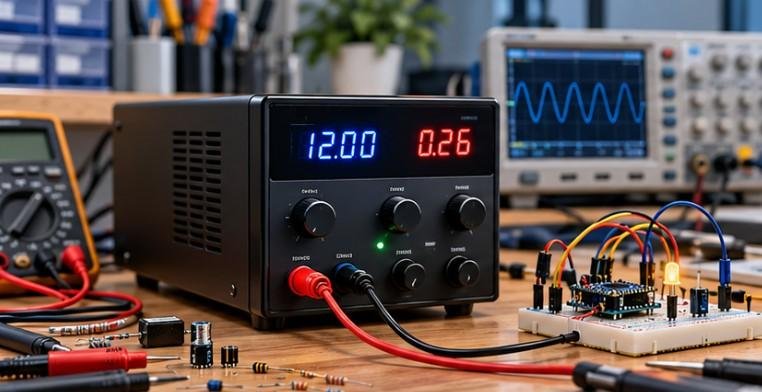
Beyond mechanical precision, reliable robotics maintenance also requires accurate electrical measurements when troubleshooting compact assemblies. A multimeter with capacitance-testing functionality can help makers evaluate capacitors and check circuit continuity during diagnostics. For guidance on choosing suitable test equipment, see this digital multimeter with capacitance test review for makers.
3 Top Precision Driver Kits Bench-Tested
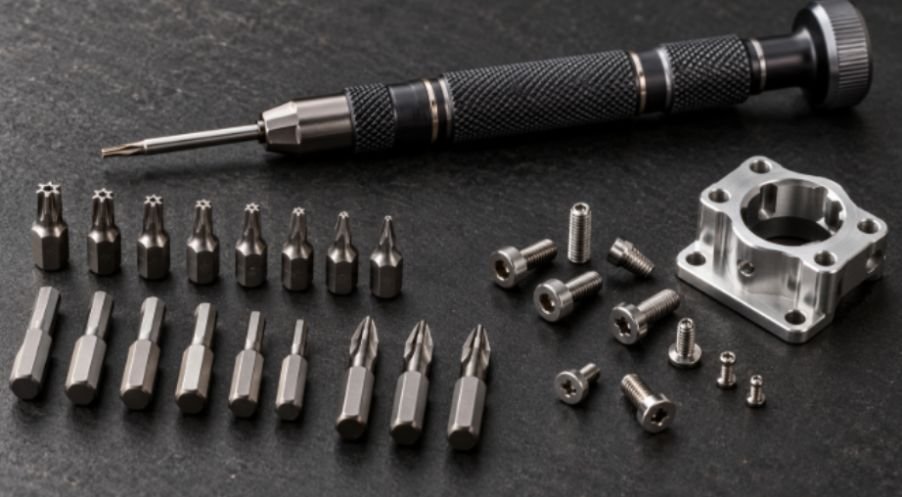
+—————————————————————————–+
| PRECISION DRIVER SELECTION MATRIX |
+————————–+———————+—————————-+
| Tool Kit | Core Advantage | Best Application |
+————————–+———————+—————————-+
| iFixit Pro Tech Toolkit | S2 Steel + Spudgers | Full chassis overhauls |
| Xiaomi Electric Driver | 0.05 Nm Motor floor | Threaded plastics & drones |
| STREBITO 142-Piece Kit | Sheer Bit Diversity | Niche metric micro-hexes |
+————————–+———————+—————————-+
iFixit Pro Tech Toolkit: The Clean Room Benchmark
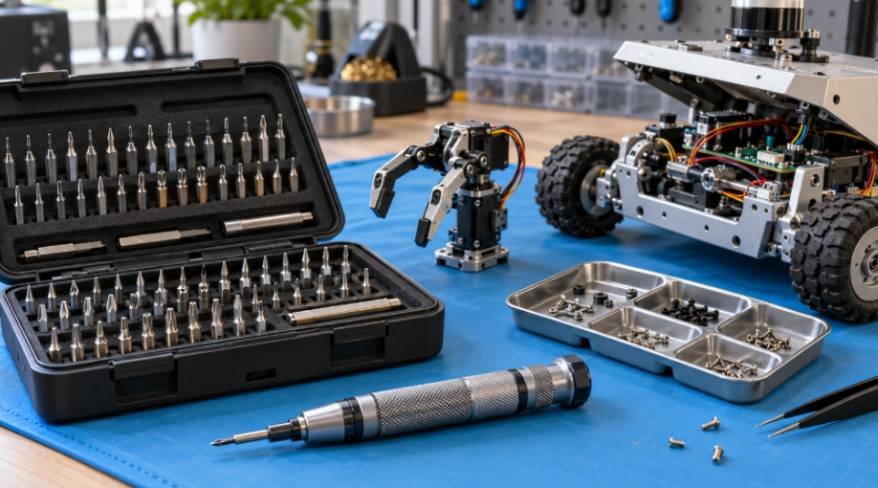
The iFixit Pro Tech Toolkit remains the industry gold standard for good reason. Its 64-bit driver set is CNC-machined from top-tier S2 steel, providing precise engagement across micro-Torx, Hex, Tri-point, and Pentalobe fasteners.
What sets this kit apart for robotics engineers is the supporting toolkit. It includes ESD-safe nylon spudgers, delicate opening picks, and high-precision cross-action tweezers.
These tweezers adhere to static-dissipation thresholds defined by the National Institute of Standards and Technology (NIST), protecting sensitive logic gates from unintended electrical discharge. The knurled aluminum handle offers great tactile feel, and the magnetic sorting tray built into the lid keeps tiny fasteners organized.
Xiaomi Precision Electric Screwdriver: Calibrated Low-Torque Driving
Motorized screwdrivers often terrify robotics technicians because runaway motor torque instantly strips threaded holes in Delrin and nylon. The Xiaomi Precision Electric Screwdriver avoids this pitfall with a regulated dual-torque gearbox:
- Low-Torque Setting (0.05 Nm): Engineered specifically for delicate PCBs, optical sensor mounts, and micro-actuators.
- High-Torque Setting (0.2 Nm): Provides sufficient rotational torque to seat chassis machine screws without stripping.
The push-to-release aluminum case holds 24 precision-machined S2 steel bits (rated to 60 HRC). If you find yourself disassembling multi-rotor drone frames or humanoid robotics limbs with dozens of identical chassis screws, this electric driver drastically accelerates your workflow while keeping micro-threads intact.
STREBITO 142-Piece Kit: Maximum Micro-Fastener Coverage
The STREBITO 142-Piece kit is built for situations where you encounter unusual metric fasteners. Custom robotics projects frequently rely on odd metric hex sizes—such as 0.7 mm, 0.9 mm, or 1.3 mm Allen configurations—to secure drive pulleys and encoder wheels.
While its bits are formed from Chrome Vanadium rather than S2 steel, the machining tolerance remains remarkably consistent. The kit pairs an ergonomic rubberized handle with a flexible extension shaft, making it easy to reach deep-set fasteners recessed inside dense structural airframes. It also includes an integrated magnetic project mat, ensuring miniature fasteners stay put on your bench.
Torque Dynamics: Protecting M1.2 to M2.0 Machine Threads
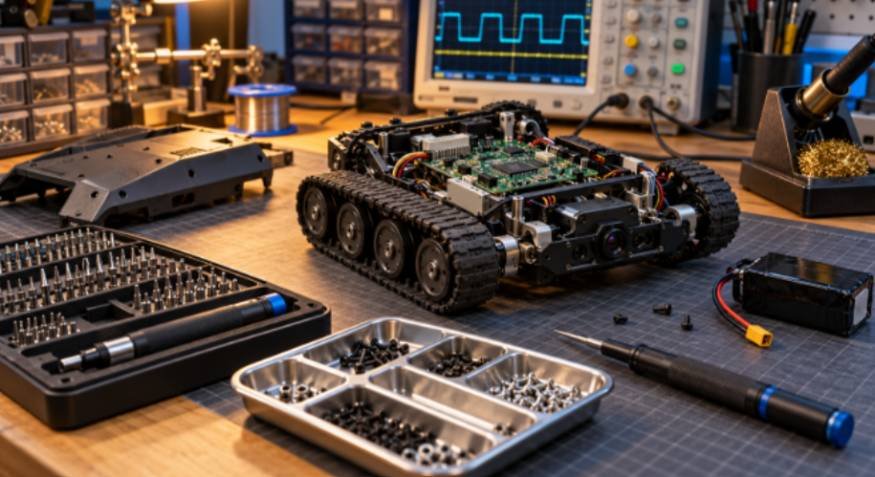
Small robotics repair requires a disciplined understanding of fastener load limits. According to ISO 898-1 mechanical fastener specifications, thread tensile capacity drops sharply as nominal screw diameters fall below 2.0 mm.
Fastener Size Thread Pitch Max Recommended Assembly Torque
—————————————————————–
M1.2 0.25 mm 0.035 to 0.050 Nm
M1.4 0.30 mm 0.060 to 0.080 Nm
M1.6 0.35 mm 0.100 to 0.140 Nm
M2.0 0.40 mm 0.200 to 0.280 Nm
Tightening miniature fasteners past these limits risks snapping the screw neck or stripping the internal threads of aluminum motor mounts. In small robotics, high torque does not mean high quality.
Proper retention relies on clean surface threads, calculated torque application, and light non-permanent threadlocking compounds, which prevent small screws from backing out under heavy motor vibration. For deep structural assemblies in mission-critical hardware, you can evaluate fastener torque limits using the technical databases hosted on the NASA Technical Standards System.
Workbench Integration: Pairing Drivers with Diagnostic Tools
Precision screwdrivers are only the starting point of a teardown. Once the housing comes apart, small robotics repair transitions into electrical diagnosis and component rework.
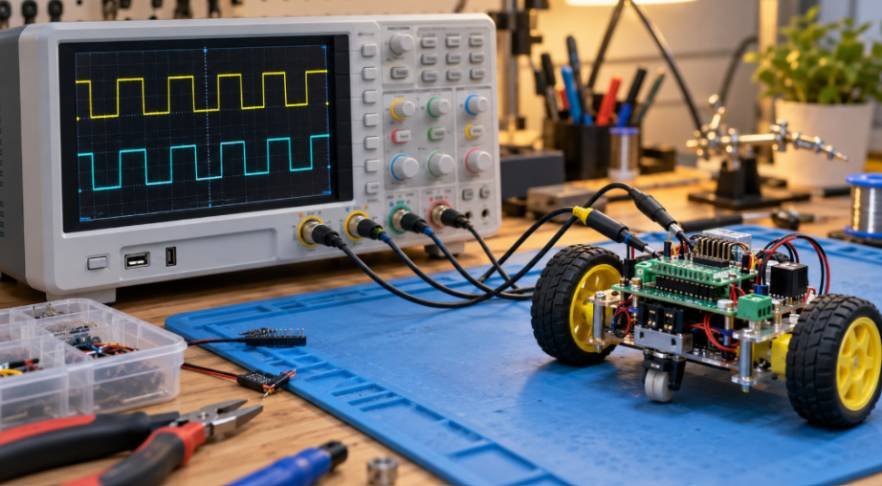
When troubleshooting noisy SPI bus lines or irregular PWM signals from stepper motor drivers, a budget digital oscilloscope review for hobby robotics can help you evaluate suitable test equipment for capturing signal anomalies and diagnosing timing inconsistencies with greater precision.
When a bad joint or damaged surface-mount filter needs replacement, fire up a temperature-controlled portable soldering station to quickly swap parts without cooking nearby circuit traces. Using top-quality driver bits guarantees you can open and seal these tightly packed enclosures without marring the structural chassis.
Frequently Asked Questions
1. What bit material is best for micro-robotics fasteners?
S2 tool steel heat-treated to 58–62 HRC is best because it resists wear and prevents rounding off micro-fastener heads.
2. Can I use a regular electric screwdriver on small robotics?
No, standard electric screwdrivers deliver excessive torque that will instantly strip micro-metric threads and crack fragile printed plastics.
3. What is the difference between JIS and Phillips bits on imported robotics?
JIS (Japanese Industrial Standard) screws do not incorporate the intentional tapered cam-out slope found on standard Phillips heads. Using a standard Phillips bit on a JIS micro-fastener quickly rounds the screw recess.
4. Why do some precision handles feature free-spinning swivel caps?
The swivel cap lets you apply continuous axial downward pressure with your index finger while smoothly rotating the driver body with your other fingers.
Zeroing Out Your Chassis Screws
Small robotics work leaves no room for sloppy tools or guesswork. Stripping an M1.2 pan-head screw buried deep inside a robotic gripper can ruin an entire sub-assembly. Invest in a dedicated S2 steel driver set, pay close attention to your torque limits, and retire any bit the second its driving edges start to shine. Your projects—and your sanity—will thank you.