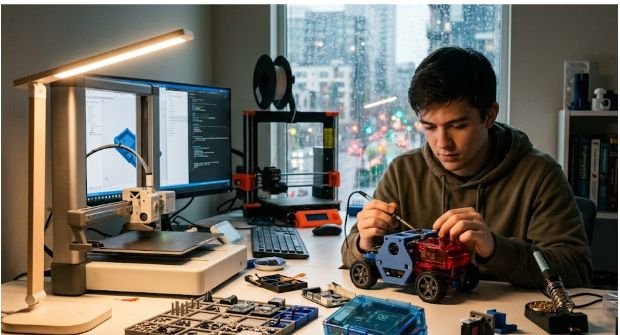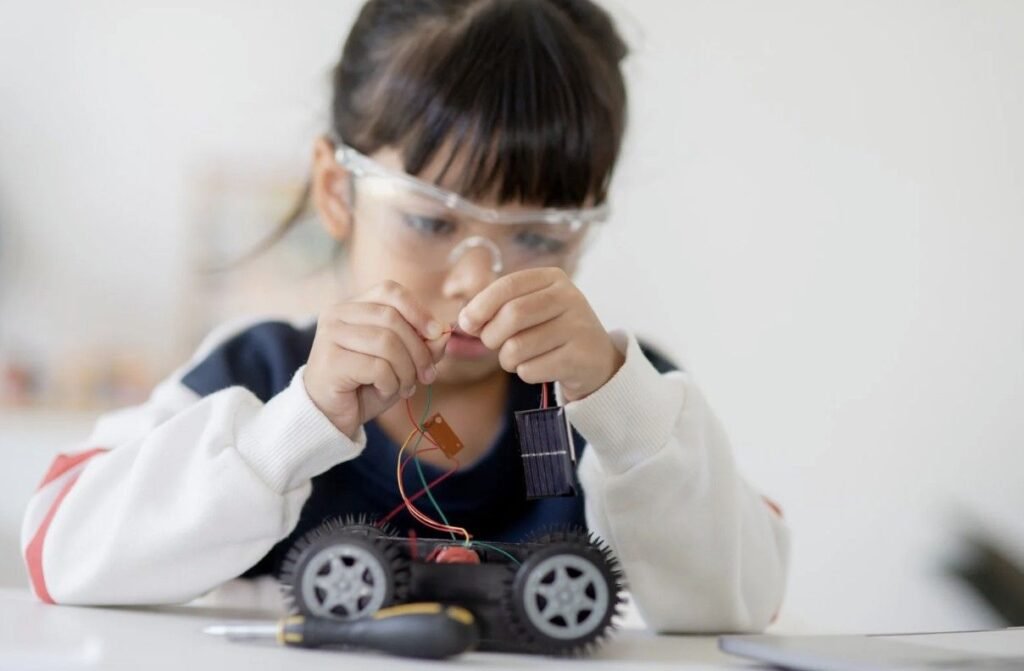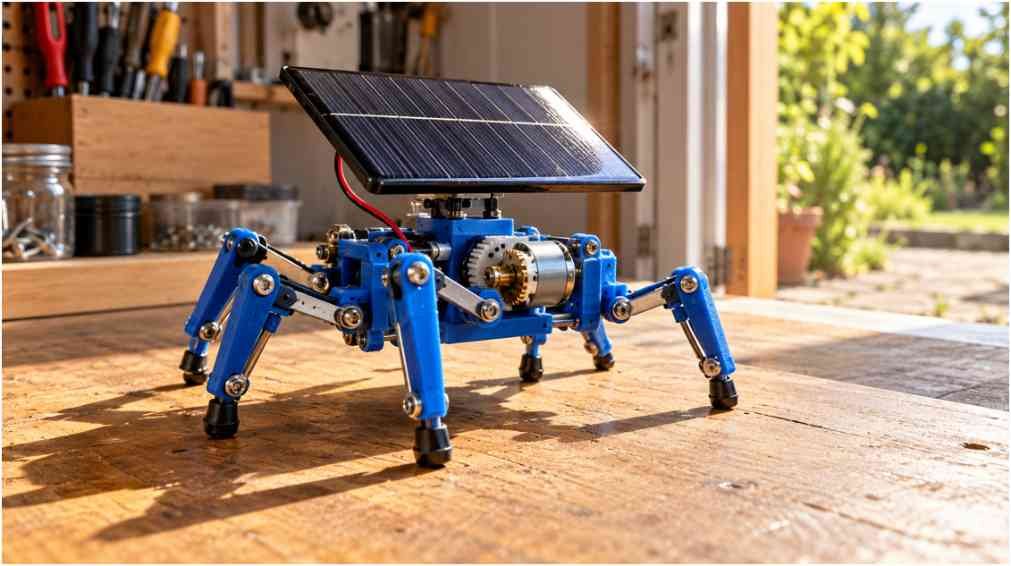
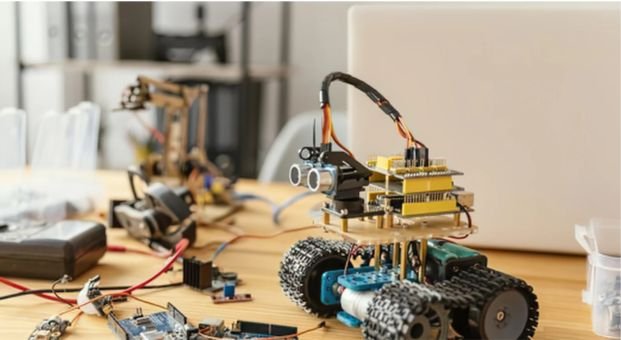
A robot works only when its hardware and software form one dependable system. The main components of a robot must sense conditions, process data, create movement, and complete a useful task. If one layer fails, the machine may become blind, unstable, powerless, or unable to act.
I find it more useful to study robots by function than appearance. A warehouse vehicle, surgical arm, and Mars rover look very different. Yet each follows the same basic loop: sense, decide, act, and check the result.
What Counts as a Core Robot Component?
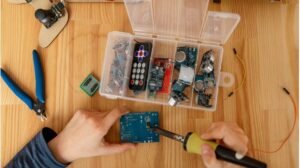
The main components of a robot fall into five universal layers: control, sensing, actuation, power, and mechanical structure. Software connects those layers. An end effector becomes a seventh component when the robot must handle tools or physical objects.
This distinction matters because not every robot contains the same visible parts. A robot vacuum has no traditional hand. A factory arm may use wall power instead of a battery. The hardware changes, but the required functions remain.
1. Control Unit: The Robot’s Decision Center
The control unit receives sensor data, runs programmed rules, and sends commands to actuators. It may also manage timing, communications, safety limits, and system errors.
For a simple robot, I would choose a microcontroller such as an Arduino or ESP32. These devices handle direct hardware control with relatively low power use. A Raspberry Pi better suits computer vision, networking, and higher-level planning. Industrial systems often use PLCs or dedicated robot controllers.
Arduino’s official mobile robot demonstrates how control tasks can be divided. One processor manages the motors, while another handles higher-level functions. This arrangement helps prevent demanding tasks from interrupting precise movement.
A controller is not automatically intelligent. Its performance depends on accurate inputs, suitable software, reliable power, and safe output limits.
2. Sensors: How Robots Measure Their World
Sensors convert physical conditions into electronic signals that the controller can interpret. Among the main components of a robot, they provide the evidence needed for each informed decision.
Internal and External Feedback
Internal sensors monitor the robot itself. Rotary encoders measure wheel or joint movement. Gyroscopes and accelerometers estimate orientation, speed, and motion. Current sensors may reveal a stalled motor or overloaded mechanism.
External sensors examine the surrounding environment. Cameras recognize objects and visual patterns. LiDAR measures distance and supports mapping. Ultrasonic and infrared sensors detect nearby obstacles. Force and pressure sensors measure physical contact.
I use one simple rule when evaluating sensors: every sensor should answer a specific control question. “Is an obstacle ahead?” is useful. “Collect more information” is not a clear engineering requirement.
NIST’s robotics work similarly connects sensor-based manipulation with navigation, mobility, actuators, and intelligent controls. Understanding how robot sensors work is essential because these sensors allow robots to detect their surroundings, measure distance, recognize objects, monitor movement, and provide real-time data that enables accurate navigation, precise manipulation, and intelligent decision-making across a wide range of robotic applications.
3. Actuators: Turning Commands Into Motion
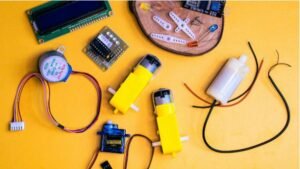
Actuators convert stored energy into physical movement. Common examples include DC motors, servo motors, stepper motors, pneumatic cylinders, and hydraulic systems.
The robot’s task determines the correct actuator. Wheels need efficient continuous rotation. Robotic joints need controlled position and torque. Heavy industrial equipment may require hydraulic force. Small educational projects often use servos because they combine a motor, gearbox, and position control.
The main components of a robot cannot be chosen separately. A stronger motor may require a larger battery, stronger frame, suitable motor driver, and better cooling.
Gearboxes increase usable torque by reducing output speed. However, poor-quality gearing can introduce backlash, noise, and positioning errors.
4. Power System: More Than Choosing a Battery
The power system supplies suitable voltage and current to processors, sensors, motors, communication hardware, and tools.
Mobile robots commonly use rechargeable battery packs. Stationary robots may use facility electricity. Specialized machines may require solar, fuel-based, or radioisotope power systems.
NASA’s Perseverance rover shows how mission conditions shape power design. Its radioisotope power system generates electricity and helps keep onboard equipment within suitable operating temperatures.
When I review a robot design, I separate logic power from motor power. Motors create electrical noise and sudden current demands. Regulators, fuses, motor drivers, and distribution boards help protect sensitive electronics.
Battery capacity matters, but peak current capacity matters too. A battery may store enough energy for an hour yet still fail when several motors start together.
5. Mechanical Structure and Chassis
The chassis is the load-bearing framework that holds the robot’s parts in alignment. It determines mass, balance, payload, range of motion, and resistance to vibration.
Steel provides high strength. Aluminum reduces weight and remains easy to machine. Carbon fiber offers stiffness with low mass. Durable plastics work well for covers, brackets, and lightweight prototypes.
Builders often choose electronics first and squeeze the frame around them. I reverse that process. I define the payload, wheelbase, joint reach, center of gravity, and maintenance access before finalizing the layout.
The main components of a robot perform better when cables are secured, sensors have unobstructed views, batteries sit low, and moving joints do not strain wires.
Mechanical design also affects sensor accuracy. A vibrating camera or flexible motor mount can create errors that software alone cannot correct.
6. End Effector: The Task-Specific Tool
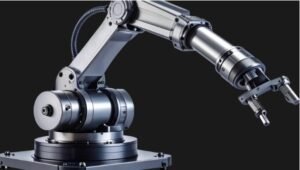
An end effector is the tool mounted at the working end of a robotic arm or manipulator. OSHA also refers to it as end-of-arm tooling.
Examples include mechanical grippers, vacuum cups, welding torches, drills, cutters, cameras, adhesive dispensers, and force sensors.
Not every robot needs an end effector. For a robotic arm, however, this component often defines the machine’s purpose. The same arm could pack boxes, weld metal, inspect surfaces, or handle food by changing its tool.
Selection should consider payload, object shape, grip force, precision, contamination risk, and failure behavior. A gripper may hold an object securely during normal operation but become unsafe if power loss releases the load.
7. Software and Programming
Software tells the robot how to interpret inputs and choose outputs. It includes firmware, motion control, mapping, computer vision, path planning, user interfaces, and safety routines.
Simple robots may run one program written in C++, Python, or MicroPython. Advanced systems divide work into smaller modules.
ROS 2, for example, organizes robot functions into nodes. These nodes communicate through topics, services, actions, and parameters. One node might publish sensor readings while another controls wheel motors.
I treat software as one of the main components of a robot because hardware without logic cannot coordinate or adapt. Good software also verifies whether a command succeeded.
It compares desired movement with encoder, camera, or force feedback. The controller then corrects the next command instead of assuming the first action worked perfectly.
How the Main Components of a Robot Work Together
Consider a small delivery robot approaching a box. A distance sensor detects the obstacle. The controller compares that reading with a programmed safety limit. Software selects a turn. The motor driver powers the wheels. Encoders confirm that the robot rotated. The chassis keeps the sensors and wheels aligned.
This worked example shows why no single component completes the task alone. The main components of a robot form a closed control loop:
Sense the current condition, decide what should happen, create an action, measure the result, and correct the next movement.
An open-loop machine stops after issuing the action. A feedback-controlled robot keeps checking the result. This improves accuracy and helps the machine respond to changing conditions.
Design Mistakes That Weaken the Main Components of a Robot
The first mistake is undersizing the power system. A controller may restart when motors begin moving because the battery or regulator cannot supply peak current.
The second mistake is poor sensor placement. Good software cannot fix a distance sensor blocked by a bracket or pointed toward the floor.
The third mistake is selecting motors by speed alone. Torque, payload, friction, wheel size, and incline also affect movement.
The fourth mistake is treating software as the final step. Wiring, sensor placement, emergency stops, and control logic should develop together.
These checks protect the main components of a robot from avoidable failures and expensive redesigns.
Frequently Asked Questions
1. What are the main components of a robot?
They are the controller, sensors, actuators, power system, chassis, software, and an optional end effector.
2. Which robot component is most important?
No single component always wins; reliable performance comes from matching every part to the robot’s task.
3. Do all robots need sensors and actuators?
Most autonomous robots need both, while remotely operated machines may rely more heavily on human commands.
4. What parts do I need for a beginner robot?
Start with a microcontroller, motor driver, motors, wheels, battery, chassis, and one distance sensor.
Build the Brain Before the Bling
The main components of a robot are easiest to understand as a coordinated system, not a shopping list. I start with the task, map the sense-decide-act loop, and then choose hardware that supports it.
Your next step is simple: write one sentence describing what the robot must detect, decide, and do. That sentence will guide every component choice. It will also prevent