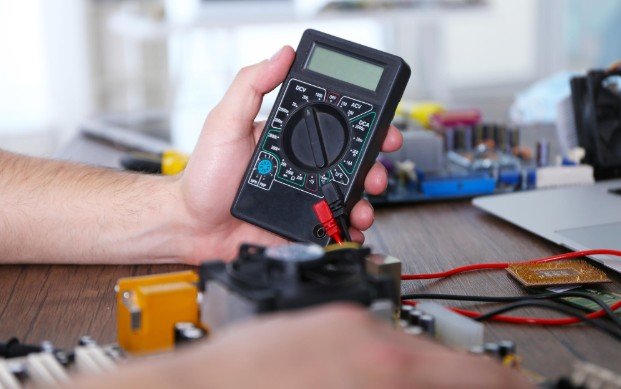
When I began testing breadboards and small circuits, I learned that the most expensive meter was not automatically the right one. The best multimeter for electronics beginners should make voltage, resistance, continuity, diode, and current checks simple without overwhelming a new user.
For most learners, the UNI-T UT139C provides the best balance of useful functions and room to grow. Another model may suit you better if price, portability, simplicity, or professional durability matters most.
7 Best Multimeters for Beginner Electronics Work
1. UNI-T UT139C: Best Overall
The UNI-T UT139C is a capable all-rounder for breadboards, Arduino boards, sensors, batteries, and components. It offers auto-ranging, True RMS, capacitance, frequency, temperature, diode testing, and continuity. Beginners can start with voltage checks and keep using it as projects advance. The dial is busier than a basic meter, so read the manual before measuring current.
2. AstroAI DM6000AR: Best Value
The AstroAI DM6000AR combines a 6,000-count display with auto-ranging and True RMS, making it useful for testing AC and DC power in electronics and electrical projects. It measures AC/DC voltage and current, resistance, capacitance, frequency, temperature, diodes, and continuity.
A backlit screen and magnetic hanging feature improve workbench use. It offers many functions for the price, although its shared dial positions may take time to learn.
3. AstroAI AM33D: Best Budget Starter
The AstroAI AM33D is a simple manual-ranging meter for AC/DC voltage, DC current, resistance, continuity, diode testing, and battery checks. It suits learners practicing Ohm’s law or troubleshooting basic LED circuits. Manual ranging teaches measurement scales, but the meter lacks capacitance, frequency, temperature, and AC current, so ambitious users may outgrow it.
4. KAIWEETS HT118A: Best Large Display
The KAIWEETS HT118A suits beginners who value a large screen. It supports auto-ranging, True RMS, voltage, current, resistance, capacitance, frequency, diode, continuity, and temperature tests. Although it cannot directly measure vacuum ultraviolet emission, it can check voltage, current, resistance, and continuity in the electrical systems that support specialized ultraviolet equipment.
Backlight, data hold, a flashlight, and non-contact voltage detection add convenience. Its numerous functions may initially feel complicated, but it provides broad capability.
5. Extech EX330: Best Compact Choice
The Extech EX330 packs auto-ranging, a 4,000-count display, capacitance, frequency, duty cycle, temperature, diode testing, and continuity into a compact body. Its rubber holster and tilt stand suit small desks and crowded toolboxes. The non-contact voltage detector is helpful, but it should not replace proper contact testing when confirming safety.
6. Klein Tools MM325: Best Manual-Ranging Alternative
The Klein Tools MM325 measures AC/DC voltage, DC current, resistance, batteries, diodes, and continuity. Lead-alert indicators help users place probes in the correct inputs. Manual ranging builds understanding but slows testing. It is best for basic troubleshooting because it omits capacitance, frequency, temperature, and AC current measurement.
7. Fluke 115: Best Premium Pick
The Fluke 115 provides a 6,000-count backlit display, True RMS, resistance, continuity, frequency, capacitance, and AC/DC current measurement. Its straightforward interface and durable construction make it suitable for learners working on multimeter Arduino projects who want one reliable meter for long-term use. The main drawback is its cost, since many beginners can get the functions they need from a cheaper model.
What Should Beginners Look for in a Digital Multimeter?
Auto-Ranging and a Clear Screen
Auto-ranging chooses an appropriate measurement range, reducing uncertainty and speeding up testing. Large digits, backlighting, stable readings, and a useful kickstand often matter more than extra modes you may never use.
A manual-ranging model can still be valuable for learning because it forces you to understand measurement scales. However, auto-ranging is usually more convenient when you are troubleshooting an unfamiliar circuit.
Fast Continuity and Diode Modes
Continuity mode helps find broken wires, weak solder joints, damaged PCB traces, and breadboard errors. A quick audible beep lets you work without constantly watching the display.
Diode mode is useful for checking LEDs, rectifiers, and semiconductor junctions. These two functions are particularly important for beginners because they can quickly reveal common wiring and component problems.
Microamp and Milliamp Measurement
Voltage is measured across a circuit, while current is measured by placing the meter in series. Connecting a meter incorrectly in current mode may blow a fuse or short the circuit.
Microamp and milliamp ranges are useful for sensors, battery-powered devices, and microcontroller sleep current. They become especially valuable when you start building portable projects where battery life matters.
Capacitance, Frequency, and Duty Cycle
These functions become useful for capacitors, oscillators, PWM signals, timer circuits, fans, and motor controls. They may not be essential during your first experiment, but choosing them now could prevent an early upgrade.
Protected Inputs and Good Test Leads
Look for fused current inputs, clear terminal labels, solid probes, intact insulation, and a safety rating appropriate for the work. The meter should also provide warnings or clear markings that reduce the risk of placing a probe in the wrong socket.
A safety rating alone does not make dangerous testing safe. Correct technique, proper protective equipment, and electrical knowledge remain essential.
Multimeter Mistakes Beginners Should Avoid
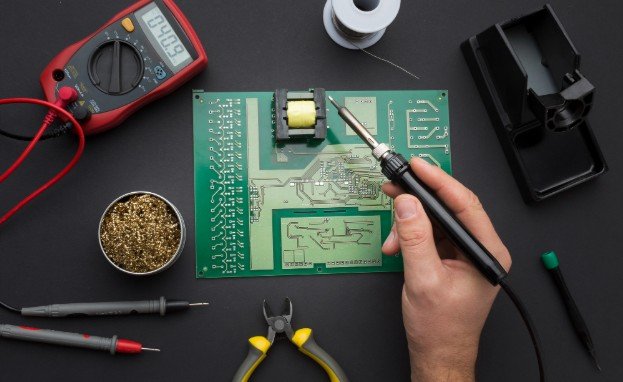
Never leave the red lead in the current socket before attempting a voltage measurement. Doing so can create a short circuit when the probes touch a voltage source.
Start at a higher range when using a manual meter, inspect the probe insulation, and confirm the selected function before touching a circuit. Disconnect power before measuring resistance, continuity, diodes, or capacitance.
Do not choose a meter only because it advertises dozens of features. Reliable continuity, protected inputs, clear labeling, readable digits, and usable probes provide more everyday value than rarely needed modes.
Beginners should also avoid testing household wiring until they understand measurement categories, maximum input limits, probe placement, and electrical safety procedures.
Frequently Asked Questions
1. What is the best multimeter for electronics beginners?
The UNI-T UT139C is a balanced overall option, while the AstroAI AM33D works well for basic testing on a smaller budget.
2. Is auto-ranging better for a beginner?
Yes. It makes testing faster and removes much of the guesswork involved in selecting voltage, resistance, or current ranges.
3. Do beginners need True RMS?
Not for most simple DC projects, but it helps with non-sinusoidal AC signals, dimmers, variable-speed motors, and some power-control circuits.
4. Can one multimeter test Arduino boards and household wiring?
Possibly, but household wiring requires an appropriate meter, safe probes, correct procedures, and far more safety knowledge than low-voltage electronics.
Final Thoughts
I would choose the UNI-T UT139C for its balance of usability and long-term usefulness. The AstroAI DM6000AR is a strong value alternative, while the AM33D covers basic learning at a lower cost.
Whatever model I bought, I would prioritize a clear screen, responsive continuity, fused current inputs, and understandable controls. A good first meter should make troubleshooting logical and remain useful as projects progress from batteries and LEDs to sensors and microcontrollers.