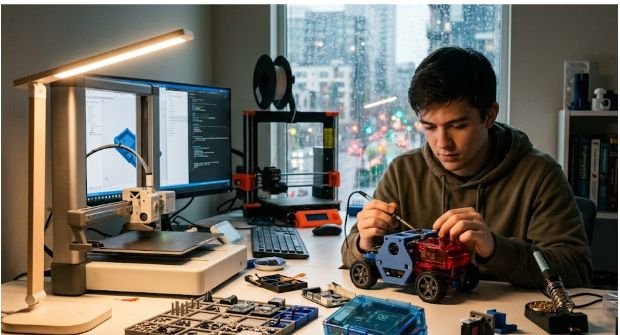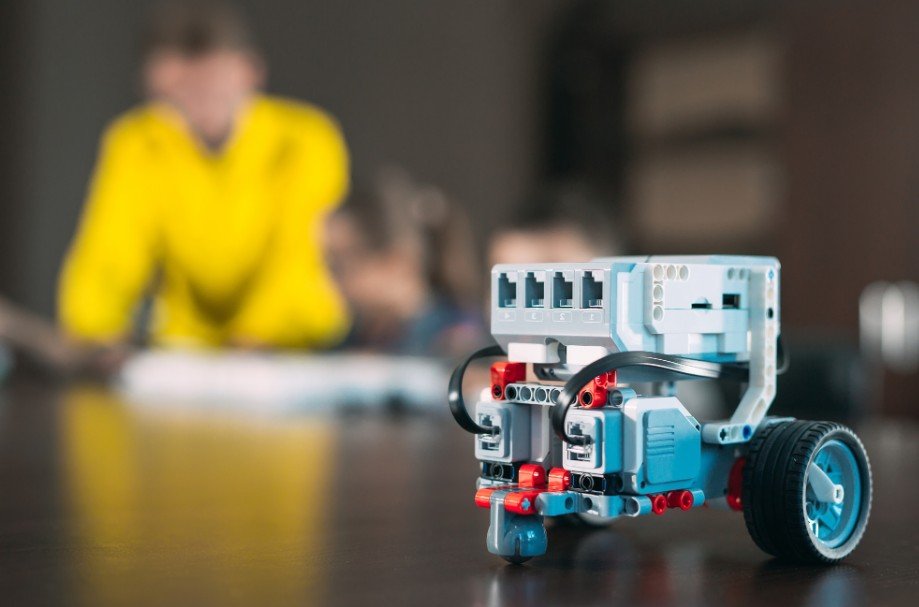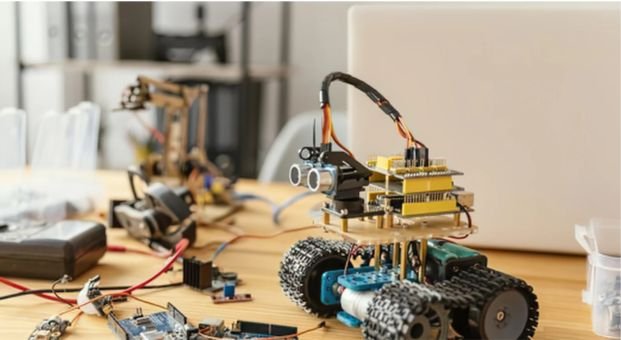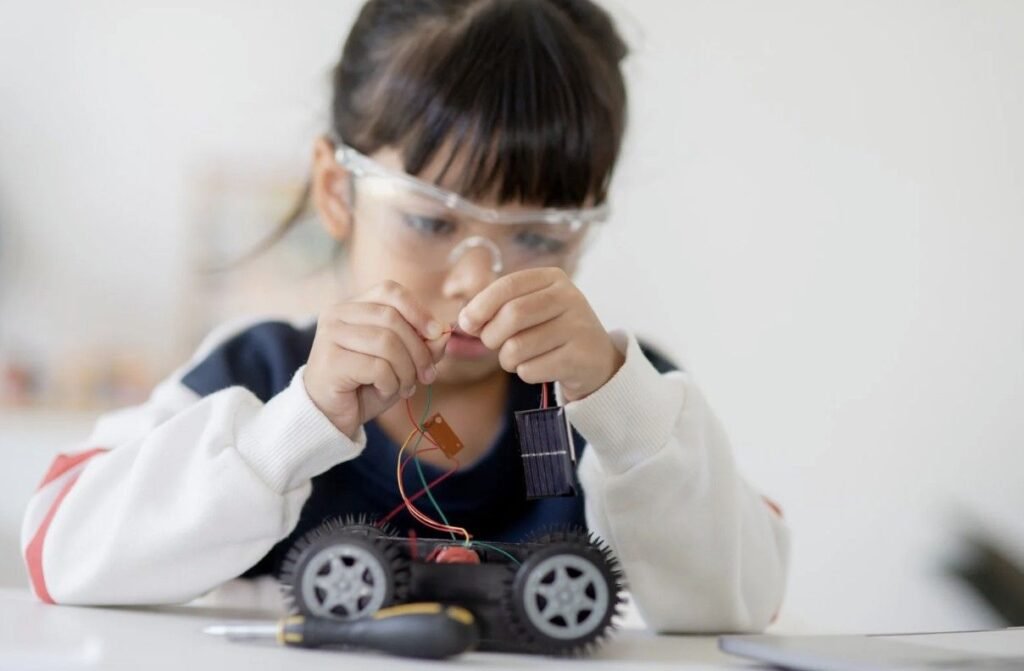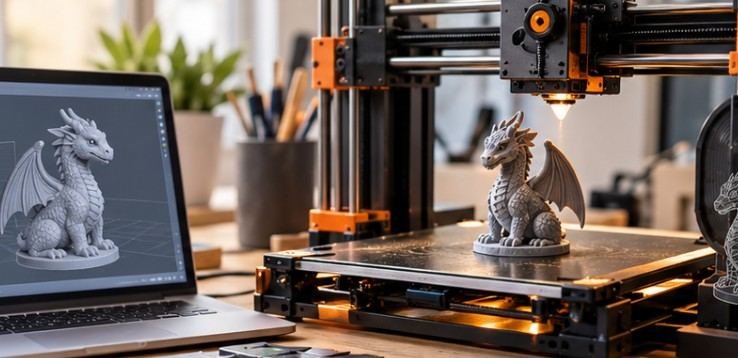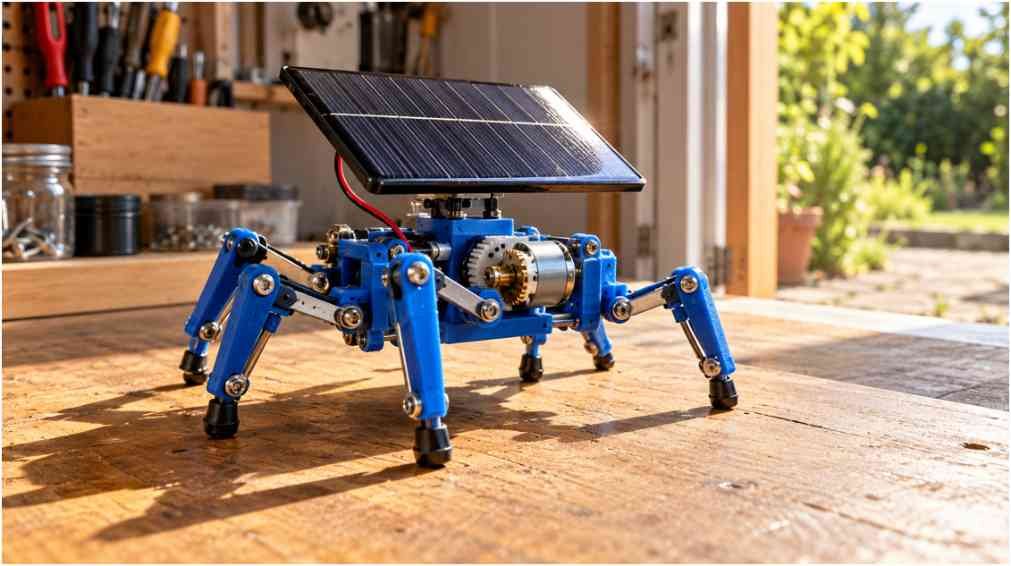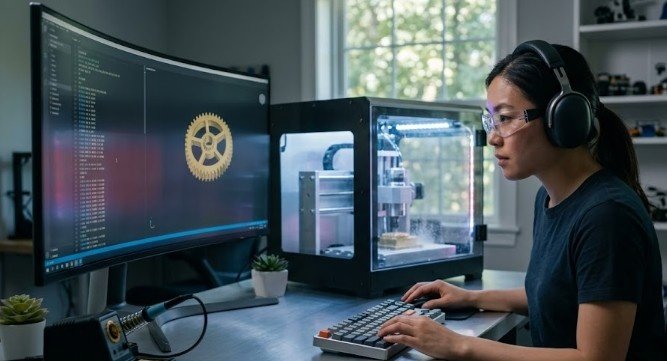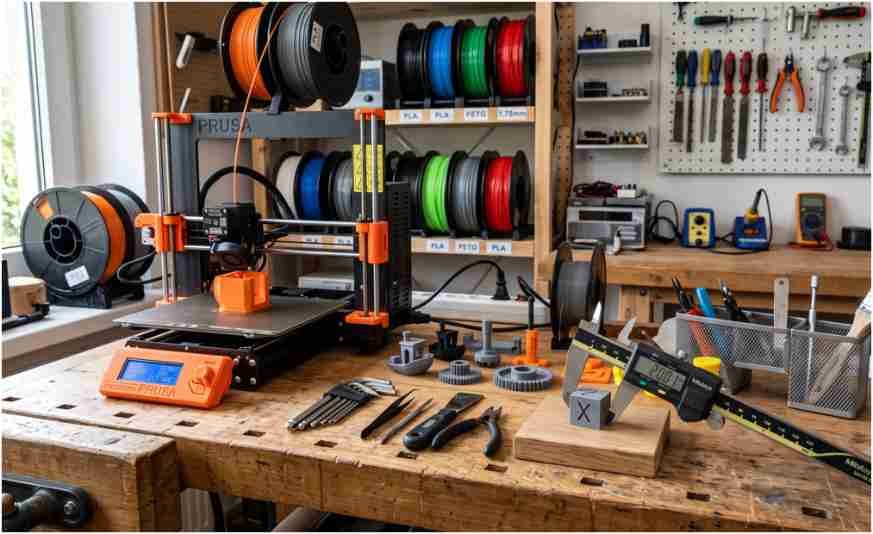
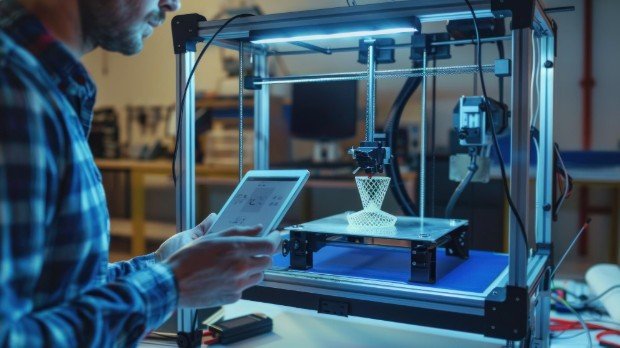
When I build a robot, I need more than a printer that produces attractive models. I need accurate servo mounts, durable chassis sections, clean bearing holes, flexible wheels, and enclosures that fit electronics without repeated sanding.
Choosing the best 3d printer for robotics projects therefore depends on materials, dimensional control, reliability, and repairability—not speed alone.
For most builders, an FDM printer is the practical choice. It produces strong, affordable functional parts and handles complete robot assemblies more easily than a typical hobby resin machine. Resin remains useful for tiny gears, detailed sensor housings, and miniature mechanisms.
Quick Recommendation
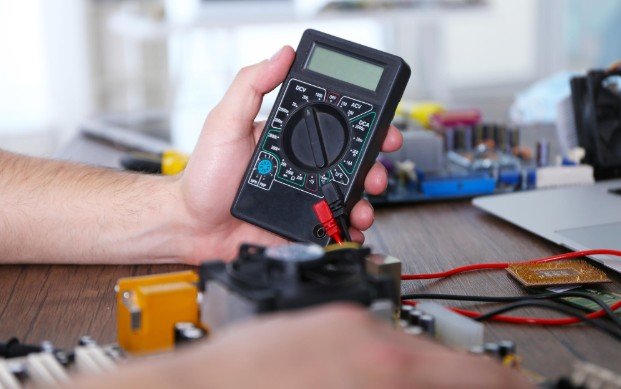
The Bambu Lab P1S is the strongest all-around option because its enclosed CoreXY design balances speed, automation, size, and material flexibility. Pairing accurate printed parts with the best multimeter for electronics can also make wiring, testing, and troubleshooting robot projects easier.
Choose the QIDI Plus4 for demanding engineering filaments, the Bambu Lab A1 for beginner-friendly printing, or the Creality K2 Plus for large robot frames.
1. Bambu Lab P1S: Best Overall
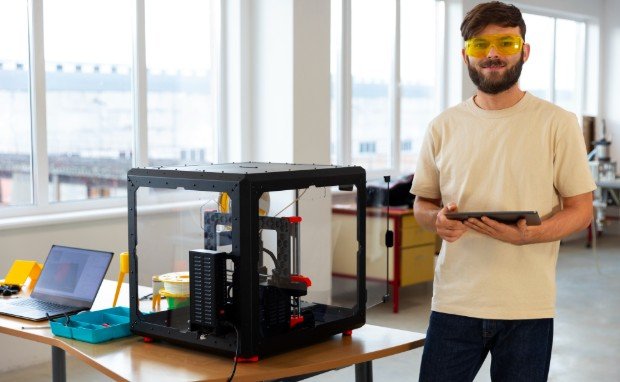
The P1S provides a 256 × 256 × 256 mm build volume, enclosed chamber, automatic bed leveling, vibration compensation, and an advertised top speed of 500 mm/s. It suits repeated batches of brackets, covers, mounts, and structural prototypes.
Its enclosure also helps when moving beyond PLA into ABS or ASA. For abrasive composite filaments, install the appropriate hardened nozzle and confirm that the filament path is compatible.
2. Bambu Lab A1: Best for Beginners
The A1 is a sensible starting point for builders printing PLA, PETG, or TPU. It has a 256 × 256 × 256 mm build area, a 300°C all-metal hotend, automatic calibration, and active flow compensation. Although it is designed for desktop projects rather than large-scale 3D printing in construction, its features make it suitable for producing accurate functional parts.
Its open frame is not ideal for warp-prone engineering plastics, but it works well for Arduino cars, sensor mounts, controller cases, lightweight chassis components, and flexible tires.
3. QIDI Plus4: Best for Engineering Materials
The QIDI Plus4 combines a 305 × 305 × 280 mm build volume with a 370°C hotend and active chamber heating up to 65°C.
That capability makes it a strong choice for nylon, carbon-fiber composites, ABS, ASA, gears, motor mounts, high-load joints, and parts positioned near warm electronics. It gives serious builders more material options than a basic open printer.
4. Prusa CORE One+: Best for Repairability
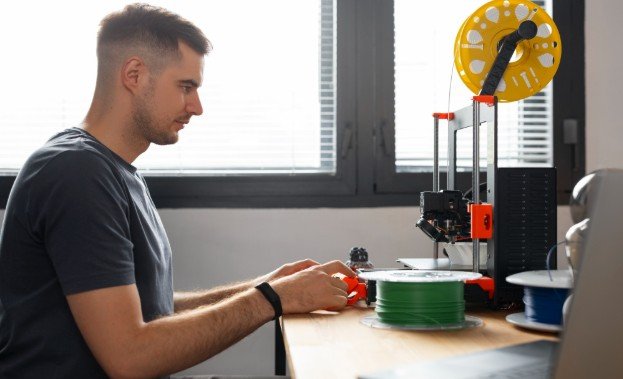
The Prusa CORE One+ is a fully enclosed CoreXY machine with active chamber temperature control, extensive filament profiles, and modular construction designed for upgrades and maintenance.
It suits schools, workshops, research teams, and makers who value long-term serviceability. Offline operation is also useful when prototype files must remain local instead of depending entirely on cloud services.
5. Creality K2 Plus: Best for Large Robot Frames
Large robots often force builders to divide chassis plates and protective shells into several pieces. The K2 Plus reduces that problem with a 350 × 350 × 350 mm enclosed build volume, 350°C nozzle, 120°C bed, and chamber heating up to 60°C.
It fits large housings, humanoid body panels, robotic arm bases, drone fixtures, and batch production. Measure its full operating clearance before purchasing because the printer requires substantial workspace.
6. Bambu Lab A2L: Best Large Open Printer
The A2L provides a 330 × 320 × 325 mm build volume, hardened extruder gear, 300°C nozzle, and advertised speed up to 500 mm/s.
Because it is open, it is better for large PLA and PETG chassis, covers, assembly jigs, and educational robots than for demanding high-temperature plastics. Its larger print area can also reduce the number of glued or bolted joints in a robot frame.
7. Bambu Lab H2D: Best Premium Option
The H2D supports dual-nozzle printing, a single-nozzle build area of 325 × 320 × 325 mm, a 350°C hotend, and active chamber heating up to 65°C.
Dual extrusion can combine structural and support materials or create parts with rigid and flexible regions. This is valuable for complex grippers, internal channels, support-heavy housings, and parts that would normally require multiple printing and assembly stages.
What to Look for in a Robotics 3D Printer
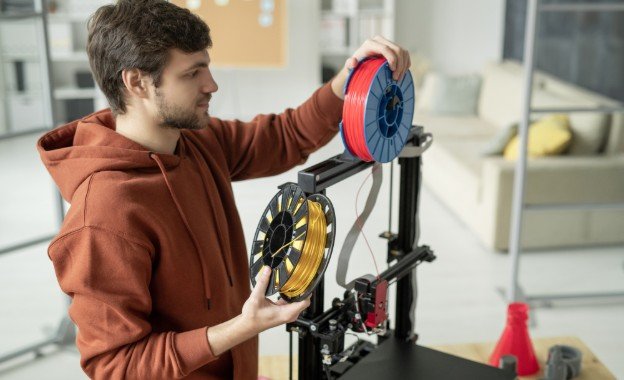
Dimensional Accuracy
Robot parts must fit shafts, bearings, screws, sensors, servos, and circuit boards. Prioritize stable motion, reliable calibration, and slicer settings for hole compensation and material shrinkage. Dimensional accuracy is particularly important when printing functional parts with tight tolerances.
Material Compatibility
PLA is excellent for early prototypes. PETG handles tougher everyday parts, while TPU works for tires, bumpers, flexible joints, and gripper pads. ABS, ASA, nylon, polycarbonate, and reinforced materials are better suited to greater heat or mechanical loads.
Enclosure and Hotend
An enclosure reduces warping and maintains a more stable printing environment. A high-temperature hotend expands material choices, but abrasive composite filament may also require hardened extruder gears and a wear-resistant nozzle.
Build Volume and Maintenance
A larger bed reduces seams in chassis components, while accessible replacement parts protect the printer’s long-term value. However, you should not sacrifice reliability for build space your projects will rarely use.
Consider the largest component you expect to print rather than the overall size of the finished robot. A large machine can still be assembled from several smaller, carefully designed parts.
Frequently Asked Questions
1. What is the best 3d printer for robotics projects for a beginner?
The Bambu Lab A1 is a practical beginner option for printing PLA, PETG, and TPU robot parts.
2. Is FDM or resin better for robot parts?
FDM is usually better for affordable structural parts, while resin is useful for smaller components requiring fine details.
3. Which filament is strongest for robotics?
Nylon and reinforced composites are strong choices, while PETG offers an easier balance of strength, price, and printability.
4. Do I need an enclosed printer?
You mainly need an enclosure for ABS, ASA, nylon, and other materials that benefit from a stable heated environment.
Final Verdict
I would choose the P1S for a balanced workshop setup, the Plus4 for engineering materials, and the K2 Plus for oversized robot frames. Beginners who mainly print PLA, PETG, and TPU should find the A1 easier to manage.
I would not choose a machine based on advertised speed alone. Accurate fit, dependable long prints, useful filament support, and accessible maintenance will matter far more to the success of a robotics project.