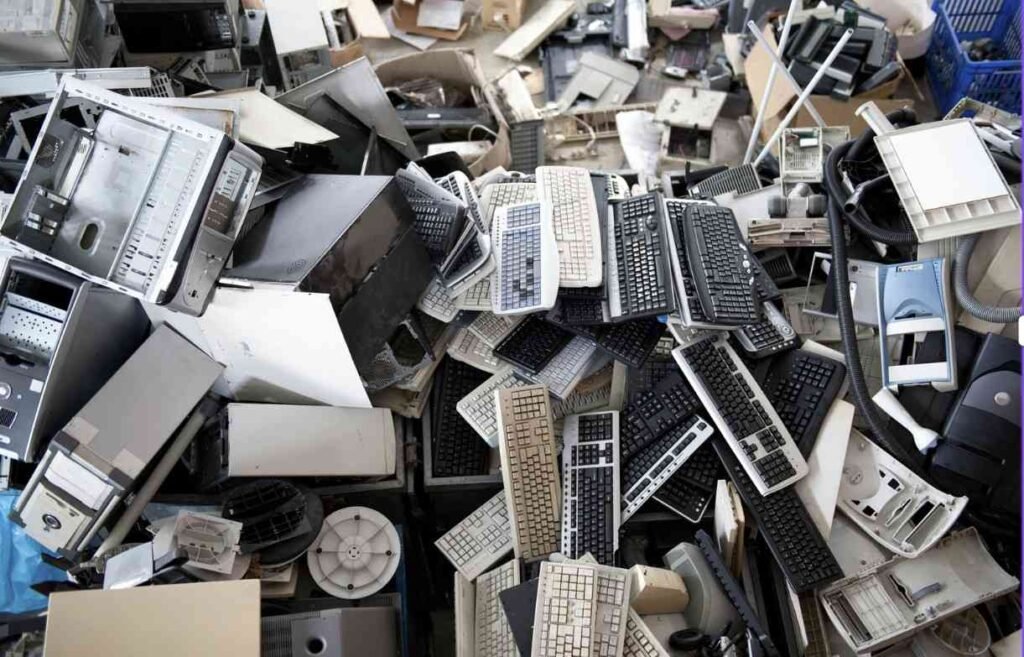
Old phones, laptops, televisions, printers, chargers, and gaming devices often sit unused because disposal feels confusing. When I need to decide where to recycle old electronics, I first check whether the device can be repaired, sold, traded in, or donated. If it has reached the end of its useful life, I use a legitimate US e-waste program instead of household trash or curbside recycling.
The right choice depends on the device, its condition, its battery, local rules, and the personal information it stores. This guide explains how to find electronics recycling near me, compare free electronics recycling services, protect sensitive data, and safely manage a swollen lithium-ion battery.
Where Can I Find an Electronics Recycling Center Near Me?
I begin with my city or county sanitation department. Many communities operate household hazardous waste facilities, e-waste collection events, or appointment-only drop-off sites. The EPA also recommends checking state and local recycling programs. Rules, fees, accepted items, and operating hours vary, so always call ahead.
Search your device type and ZIP code together using terms such as “e-waste drop-off locations,” “recycle old computers,” “recycle old cell phones,” “TV recycling near me,” or “where to recycle swollen lithium batteries.” Swollen batteries require specialized handling, so confirm that the facility accepts damaged, defective, or recalled batteries before transporting them.
Do Retail Stores Recycle Electronics for Free?
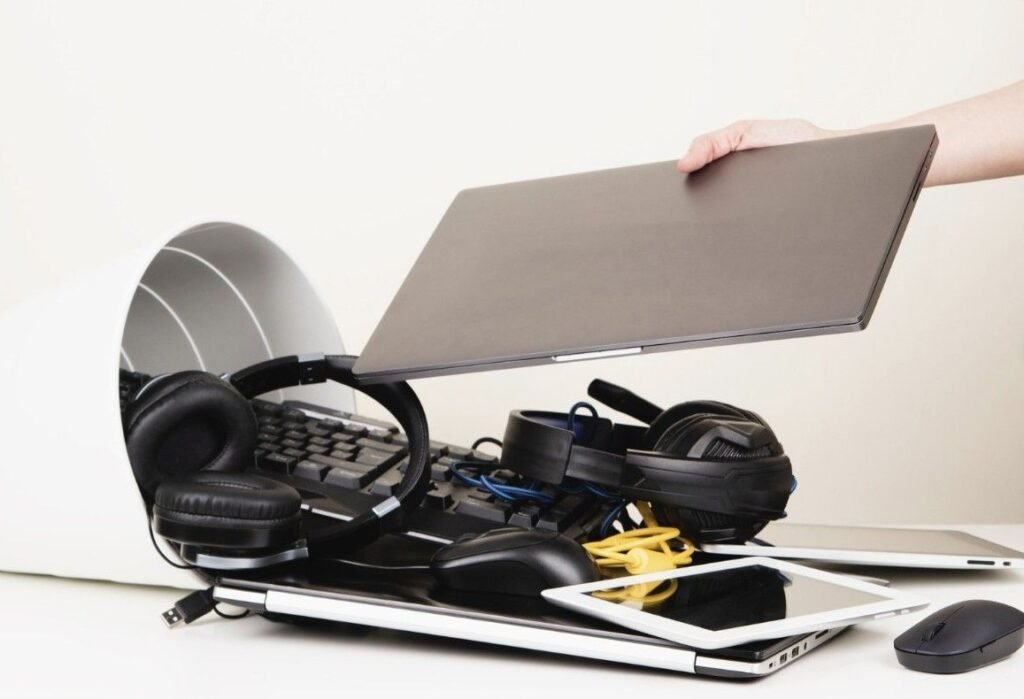
Retailer electronics recycling works well for computers, phones, cables, and smaller devices. Best Buy accepts many electronics at US stores, but limits, state restrictions, and fees may apply. Products that present a health or safety hazard are excluded from its standard recycling program.
Staples also recycles eligible electronics at participating US stores. Confirm that the location accepts your exact printer, monitor, battery, computer, or accessory before traveling.
Can Manufacturers Take Back Old Devices?
Manufacturer take-back programs may accept branded phones, tablets, laptops, smartwatches, and accessories. Apple offers credit for eligible products and free recycling for Apple devices without trade-in value. It tells customers not to mail equipment containing swollen, damaged, or defective batteries.
Microsoft also operates a US trade-in program for eligible laptops, phones, tablets, and game consoles. The device may qualify for cash back or responsible recycling, depending on its condition and the program’s current terms.
Should I Sell, Donate, or Recycle My Electronics?
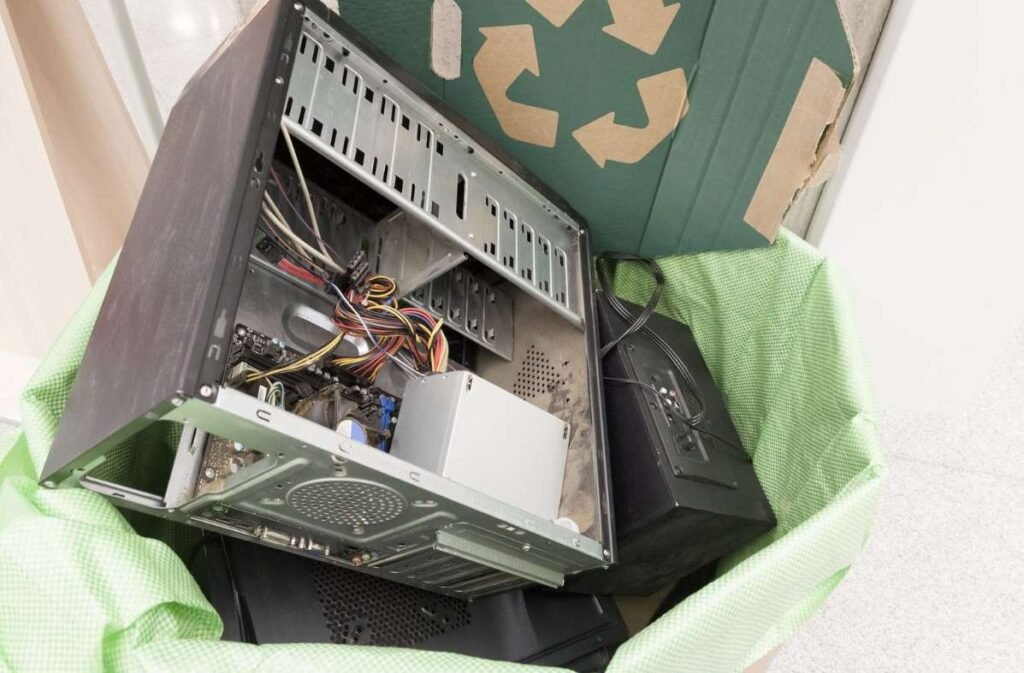
I avoid recycling a working product before checking its value. Recent devices may qualify for resale, trade-in credit, or cash-back services. Anyone searching to recycle electronics for cash should compare the final offer, shipping terms, and data-erasure requirements.
Electronics donation centers may accept functioning products that still support current software. Schools, libraries, community organizations, and digital-access nonprofits may need usable laptops, tablets, or phones. Recycle equipment when it is unsafe, obsolete, badly damaged, or unwanted by donation programs.
How Do I Choose a Certified Electronics Recycler?
A certified electronics recycler provides stronger assurance about environmental practices, worker safety, and data security. The EPA identifies R2 and e-Stewards as the two accredited electronics-recycling certification standards in the United States.
Ask whether the facility serves households, accepts your device, charges a fee, manages batteries, and provides documented data destruction. Certification matters most for hard drives, business equipment, servers, and devices containing confidential records.
How Should I Wipe Electronics Before Recycling?
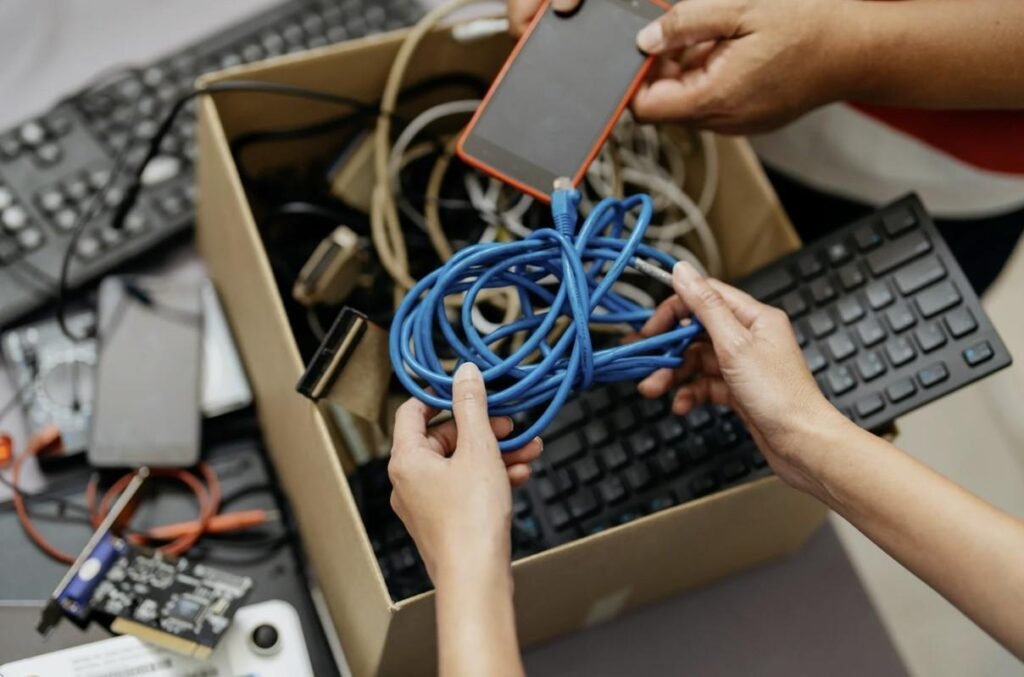
Knowing how to wipe electronics before recycling protects passwords, banking details, photos, and work files. Back up important data, sign out of accounts, disable activation locks and device tracking, perform the manufacturer’s reset procedure, and remove SIM cards, memory cards, cases, and external drives.
For highly sensitive computer records, follow the operating-system maker’s secure-erasure instructions or choose a recycler that provides verified data destruction. The EPA (The Environmental Protection Agency) advises consumers to delete personal information and remove batteries when required before donating or recycling electronics.
Where Should I Take a Swollen Lithium-Ion Battery?
A swollen battery requires different handling from an ordinary depleted battery. Swelling signals damage and a potential fire hazard. Never place one in household trash, curbside recycling, or a standard retail battery box.
Contact the product manufacturer, retailer, state waste agency, local household hazardous waste program, or qualified e-waste handler for instructions. Not every electronics recycling facility can safely accept a damaged lithium-ion battery.
Common hardware-store battery boxes generally do not accept damaged, defective, or recalled batteries. Call ahead and ask whether the location has a dedicated DDR process or approved container. The Battery Network directs consumers not to bring DDR batteries to standard participating collection sites.
Stop charging and using the device immediately. Do not intentionally drain, puncture, compress, dismantle, or force out a heavily swollen battery. If you can cover exposed terminals without touching the damaged casing, use nonconductive tape.
Follow instructions from your local hazardous waste authority for temporary storage. When recommended, isolate the battery in a nonmetal, nonconductive container with nonflammable material such as sand or kitty litter. Never seal it in an airtight glass jar. Keep it cool, dry, ventilated, and away from direct sunlight, heat, flammable materials, children, and pets.
If the battery starts smoking, hissing, venting gas, producing a strong chemical odor, sparking, or becoming extremely hot, move away, warn others, evacuate the immediate area, and call 911. Do not pick up or transport an actively failing battery. The US Fire Administration advises evacuation and an immediate emergency call when a lithium-ion battery fire occurs.
What Electronics Can I Recycle?
Programs commonly accept phones, tablets, computers, printers, cables, chargers, cameras, audio products, and gaming devices. TVs and monitors may have fees or size limits, while loose batteries require separate collection.
Verify the rules for CRT screens, broken devices, ink cartridges, smart-home equipment, and business quantities. Retail and municipal programs may change their accepted-item lists without notice.
Frequently Asked Questions (FAQs)
1. Where to recycle old electronics for free?
Start with your city or county program, then compare retailer drop-offs and manufacturer take-back services. Confirm fees, limits, and exclusions before visiting.
2. Can I put small electronics in curbside recycling?
Usually not. Electronics and lithium-ion batteries can damage sorting equipment or start fires, so use an approved e-waste or household hazardous waste site.
3. Can I recycle a broken laptop with personal data?
Yes, but erase its storage first or choose a certified facility that offers documented data destruction.
4. Do recycling centers accept swollen batteries?
Some specialized household hazardous waste and DDR programs do, but standard retail bins generally do not. Describe the battery’s condition before transporting it.
Make Electronics Recycling Safer and Easier
I sell or donate useful devices, recycle dead equipment through verified programs, erase personal data, and separate batteries from ordinary waste. A few minutes of research can protect my information, reduce fire risks, and keep reusable materials out of US landfills.